
Last updated November 4, 2026
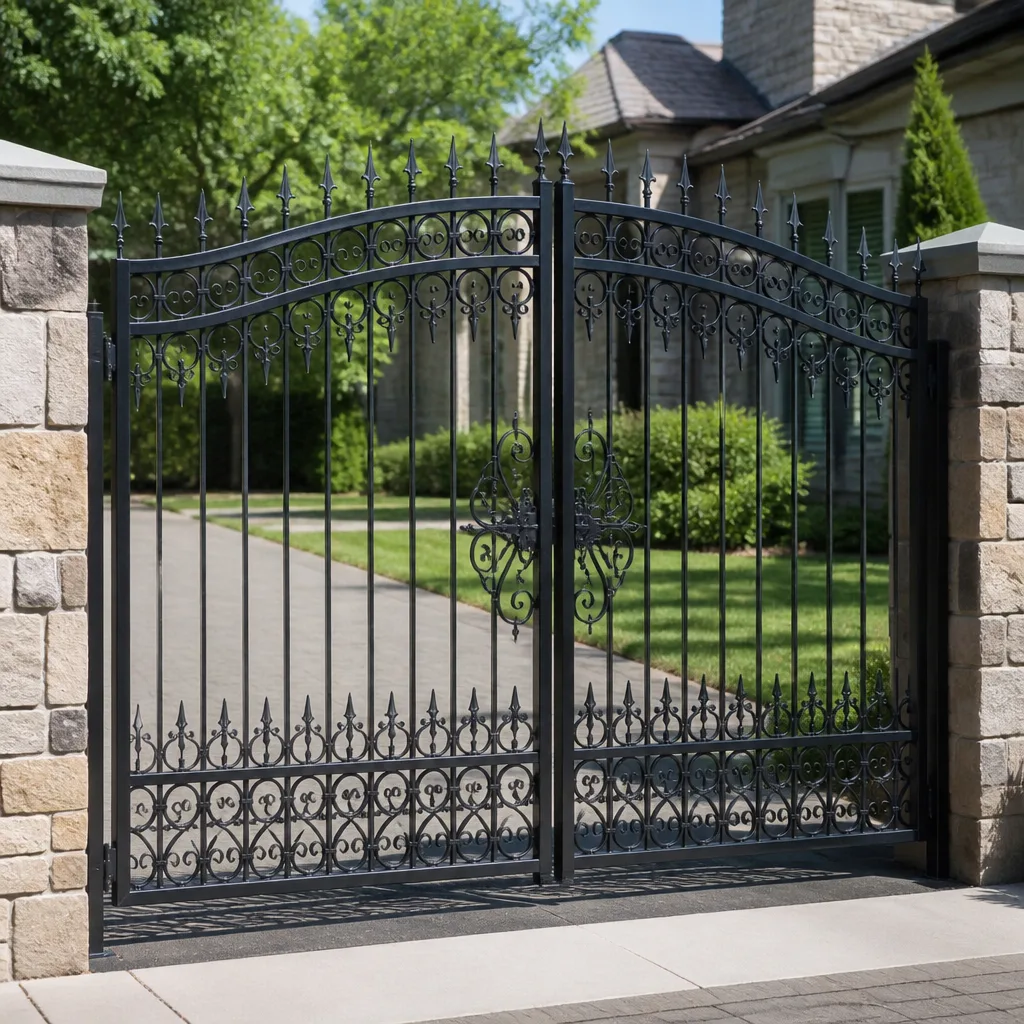 Wrought iron
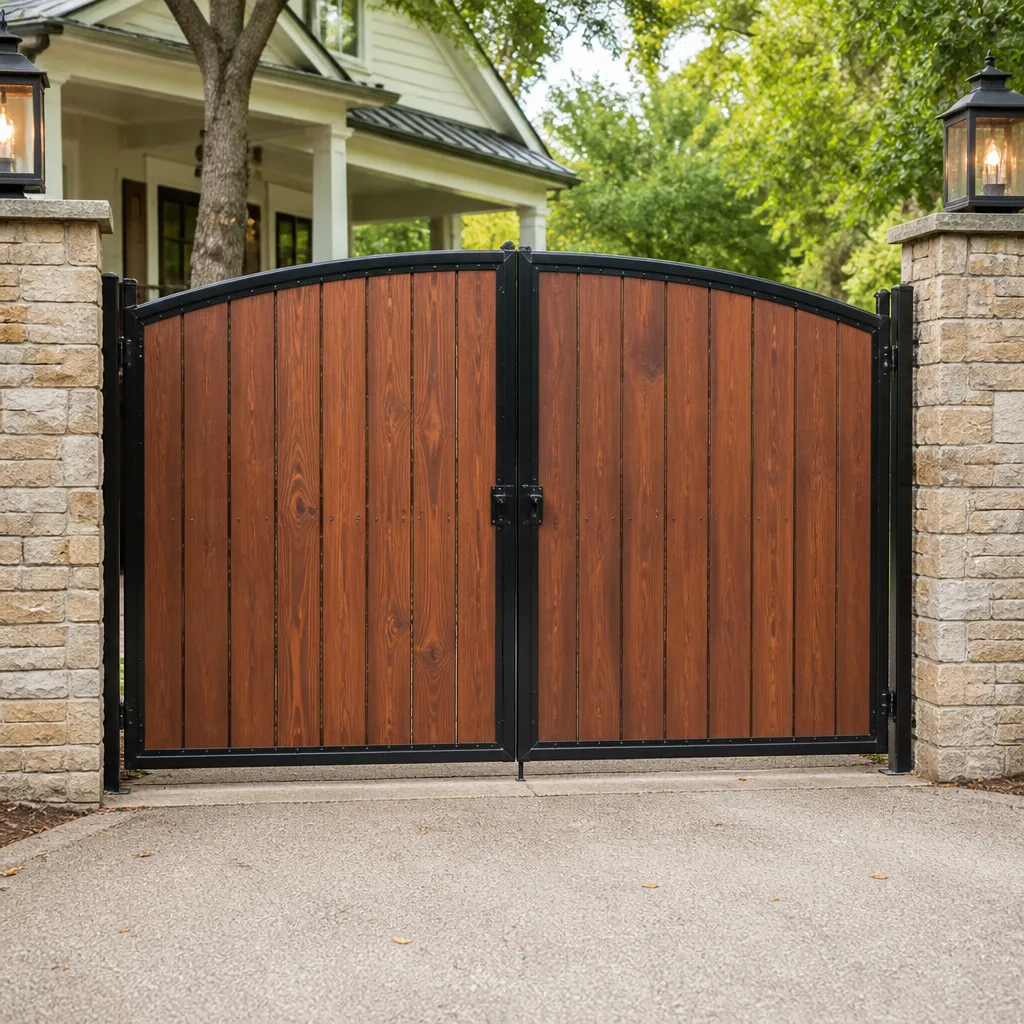 Wood & steel frame
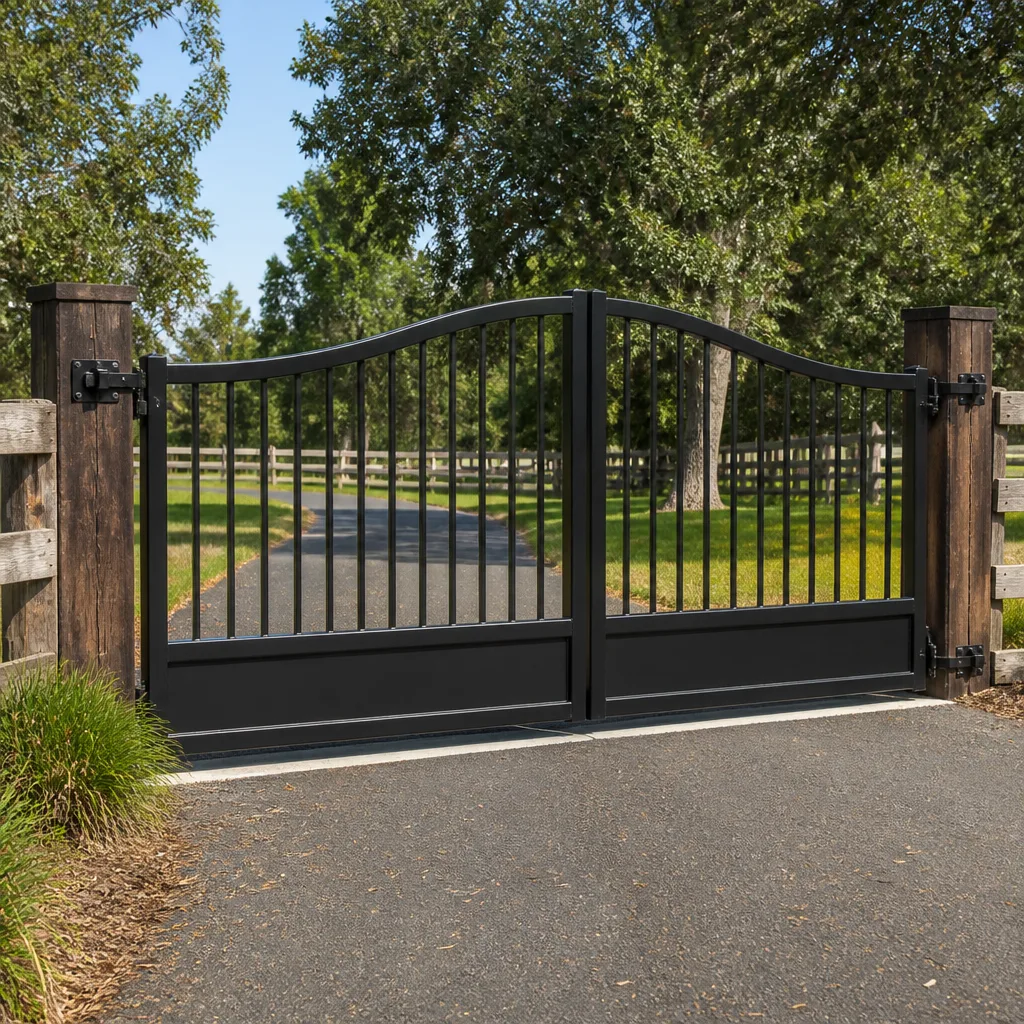 Farm & ranch
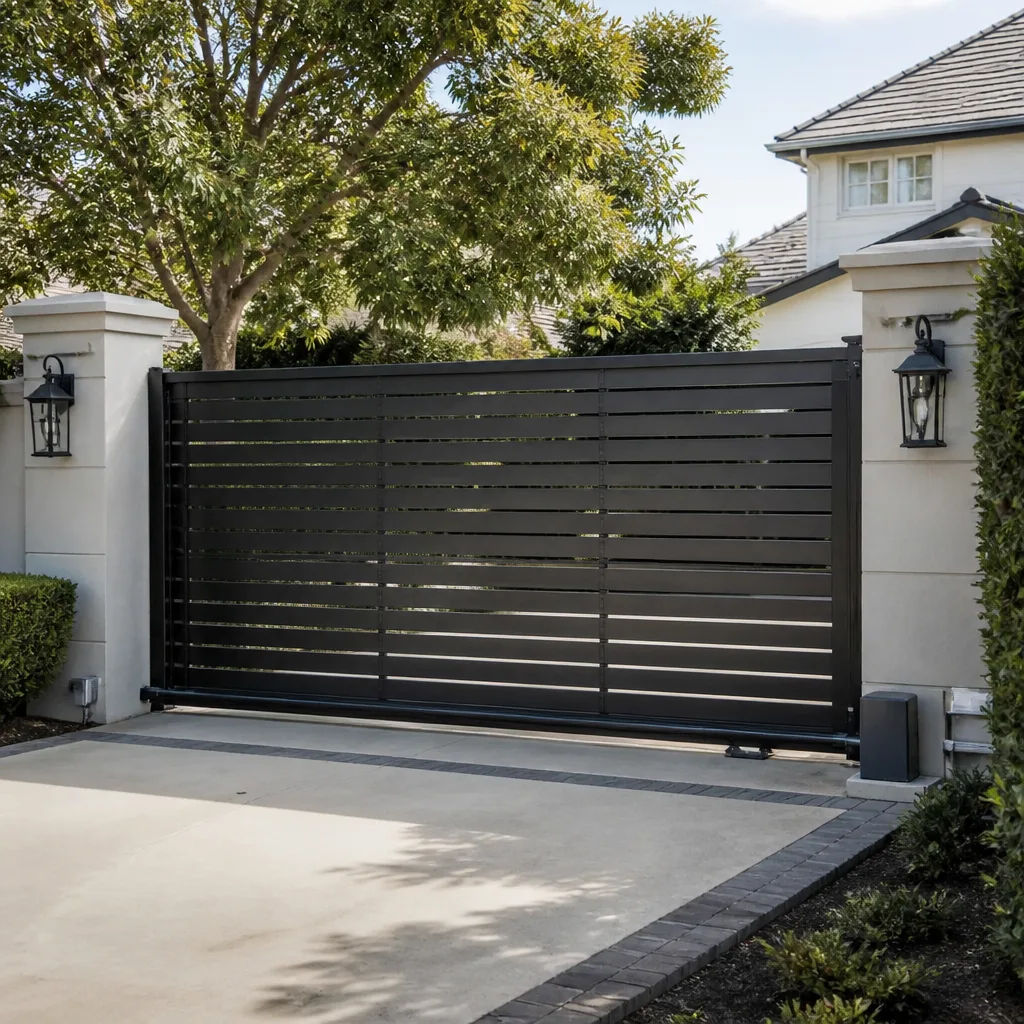 Sliding driveway gates
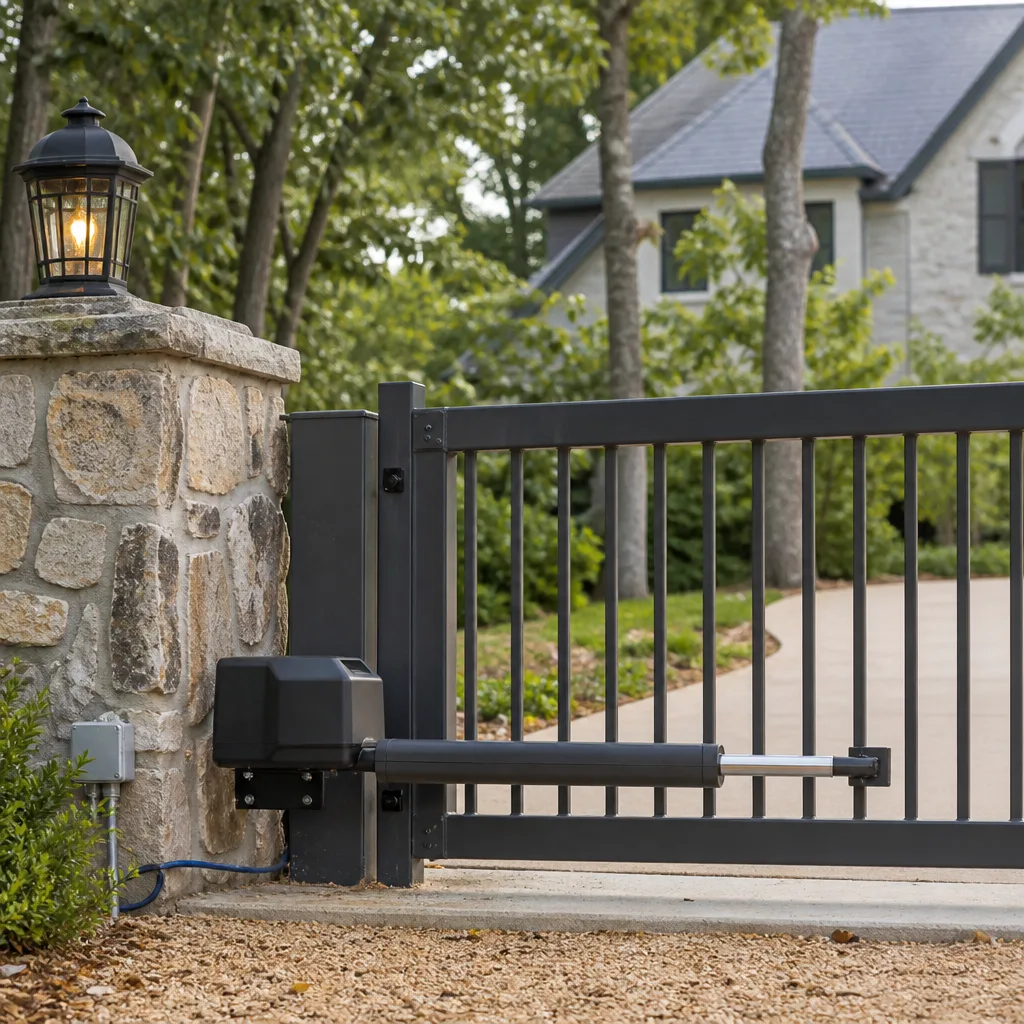 LiftMaster operators
Free on-site gate assessment - hinges, posts, and your LiftMaster or Nice gate operator checked before anything is quoted
The assessment is free and the quote is the invoice.
Get your free estimateGate Repair Maintenance Checklist for Moreno Valley Homeowners
The most expensive gate repair we see every summer isn’t random. It’s the same chain-driven slide gate operator that seized up because nobody lubricated the rail during spring. That single missed step costs Moreno Valley homeowners $400 to $900 in a typical year, and it takes about four minutes to prevent. Most maintenance guides treat gates as if they live in a mild, predictable climate. Yours doesn’t. This checklist is sequenced around the specific failure patterns that Inland Empire summers, Santa Ana winds, and UV exposure actually cause, so you’re addressing the right components at the right time instead of following a generic national template.
Quick Answer
A gate maintenance checklist for Moreno Valley should follow a seasonal rhythm: clean and lubricate moving parts each spring before heat stress peaks, inspect electrical connections and battery health every 60 to 90 days from June through September, clear dust and debris from tracks and photo-eye sensors monthly, and test all safety functions after any high-wind event. The goal is preventing the heat-accelerated failures that show up most often on automatic and electric gate systems in this part of the Inland Empire.
Styles & brands we work with
- Wrought iron
- Wood & steel frame
- Farm & ranch
- Sliding driveway gates
- LiftMaster operators
Table of Contents
- Seasonal Maintenance Rhythm for Moreno Valley’s Climate
- Lubrication Points: Swing, Slide, and Barrier Arm Gates
- Electrical Systems and Battery Testing in Inland Empire Heat
- Sensors, Photo Eyes, and Safety Edge Checks
- Weld Points, Hinges, and Early-Stage Rust Inspection
- Dust, Debris, and Track Clearance in a Dry Climate
- Printable Month-by-Month Gate Maintenance Log
- Common Mistakes to Avoid
Seasonal Maintenance Rhythm for Moreno Valley’s Climate
Moreno Valley gates don’t fail evenly across the year. They fail in clusters, and the clusters follow the weather. Summers that push above 105°F accelerate wear on motors, batteries, and plastic components. Santa Ana wind events in the fall stress hinges, welds, and the brackets that hold operators in place. The minimal rainfall means dust accumulates constantly, working its way into tracks, chains, and control boards. A seasonal maintenance schedule built around those three forces catches problems before the gate stops working.
Here’s the rhythm we recommend for homeowners in Moreno Valley:
- Spring (March through May): Deep clean and lubricate all moving parts. Test the battery backup after the mild winter. Check for any rust that formed during the occasional damp periods. This is the most important maintenance window of the year because it prepares the gate for peak heat stress.
- Summer (June through September): Monthly electrical inspections. Check battery health every 60 days since heat shortens battery life. Look for sagging chains or belts that expand with heat. Clear dust from photo-eye lenses and control board vents more frequently.
- Fall (October through November): After the first Santa Ana wind event, inspect all weld points and hinge hardware for stress cracks or loosened bolts. Check that the gate panel itself hasn’t shifted on its hinges. Verify safety edges still reverse the gate properly.
- Winter (December through February): Winter here is mild, which makes it the easiest season for gate maintenance. Focus on cleaning accumulated dust from the operator housing, checking for moisture intrusion after the rare rain, and testing the manual release. This is also a good time to schedule any deferred repairs before spring heat arrives.
Most Moreno Valley homeowners who follow this schedule avoid the mid-summer panic call when a gate stops responding. The key is remembering that the heat is harder on your gate than any other weather condition we get here. For help setting up your gate for the season, gate repair service includes a full inspection and adjustment of all mechanical components.
Lubrication Points: Swing, Slide, and Barrier Arm Gates
Not every lubrication point is the same, and the wrong lubricant does more damage than none at all. In our experience, homeowners often grab a can of WD-40 and spray everything that moves. WD-40 is a solvent, not a lubricant. It cleans surface grime but doesn’t leave the long-lasting film that chains, hinges, and rails need. Worse, certain petroleum-based products degrade rubber seals and plastic bushings over time, compounding the original problem.
Here’s what to lubricate, broken down by gate type:
Swing Gates
- Hinge pins and bushings: Apply a silicone-based or lithium grease spray to each hinge pin twice a year. Swing gates with dual hinges on each leaf need all four points lubricated.
- Operator piston or arm pivot points: The points where the operator connects to the gate leaf move constantly. A dry pivot forces the motor to work harder and shortens its life. Use a light machine oil or silicone spray.
- Latch and lock hardware: The mechanical latch or magnetic lock that holds the gate closed needs quarterly cleaning and lubrication. Dust builds up here quickly in Moreno Valley’s dry climate.
Slide Gates
- Track rails: This is the one that causes the $400 to $900 summer seizure we mentioned earlier. Clean the rail with a dry cloth first, then apply a thin coat of white lithium grease. Do this every 60 to 90 days during summer.
- Chain or belt drive: Check for sag and lubricate sparingly. More lube isn’t better; excess grease attracts dust and creates a gritty paste that accelerates wear.
- Roller wheels and guide rollers: Each wheel bearing should spin freely. One frozen wheel forces the entire gate to drag, which overheats the motor and can burn out the control board.
Barrier Arm Gates
- Arm pivot and counterweight assembly: Lubricate the pivot point and check the counterweight springs for tension. Barrier arms cycle more frequently than most residential gates, so they need lubrication on a monthly schedule if used commercially.
- Cabinet hinge and lock: The operator housing on a barrier arm gate needs its hinge and lock protected from dust intrusion. Clean the gasket edge with a damp cloth before lubricating.
For gates from brands like BFT, Linear, and Ghost Controls, the lubrication points are similar but the access panels differ. We work on every one of these systems. If you’re unsure which lubricant matches your specific gate, a free estimate from our team will clarify it. Our electric gate repair service includes lubrication as part of every repair so the problem doesn’t come back from neglect.
Electrical Systems and Battery Testing in Inland Empire Heat
Heat is the silent killer of gate electronics. A control board mounted inside a steel operator housing can easily reach 140°F on a 105°F Moreno Valley afternoon. Capacitors dry out faster. Solder joints weaken. And the battery backup units that most homeowners forget about fail about 40% earlier in our climate than they would in a coastal one. Testing the electrical system is not optional, and the summer schedule is different from what a national checklist would tell you.
Here’s the electrical maintenance protocol we recommend for Moreno Valley gates:
- Battery backup test (every 60 days from June through September): Unplug the operator from AC power and run the gate through a full open-close cycle on battery only. If the gate moves slowly or doesn’t complete the cycle, the battery needs replacement. Heat shortens battery life, and a battery that fails during a power outage leaves your gate dead.
- Control board visual inspection (monthly during summer): Look for swelling capacitors, discolored board sections, or a burnt smell inside the operator housing. These are early signs of heat damage. Control boards run hot in our summers, and catching a swollen capacitor before it pops saves a complete board replacement.
- Wire connection tightening (twice a year): Thermal cycling causes wire terminals to loosen. A loose connection creates resistance, which creates more heat, which loosens the connection further. Check all terminals on the control board, the battery, and the operator motor for tightness.
- Ground wire verification (once a year): A proper ground protects the control board from power surges during electrical storms. Even without much rain, lightning does happen in the Inland Empire, and a grounded system is the difference between a tripped breaker and a fried board.
- Power supply check (every spring): Confirm the outlet or dedicated circuit feeding the gate is delivering consistent voltage. Older Moreno Valley homes sometimes have undersized circuits that struggle with newer operator models. If the breaker trips more than once, call an electrician or our gate team to investigate.
If any of these checks turns up a problem you’re not comfortable addressing, that’s exactly what we’re here for. Gate Repair Moreno Valley handles electrical troubleshooting as a core specialty, including openers, sensors, control boards, and wiring. It’s not an add-on service; it’s half of what we do. For a deeper look at how we approach these systems, see our electric gate repair page.
Sensors, Photo Eyes, and Safety Edge Checks
Safety features fail quietly. The gate still opens and closes fine, so nobody notices that the photo eye stopped working until a child or pet walks through the path and the gate doesn’t stop. In Moreno Valley, dust is the main culprit. A fine layer of Inland Empire dust on a photo-eye lens is enough to scramble the beam without completely blocking it, so the system gives intermittent or false readings. Safety checks need to be part of your routine, not just an annual test.
Here’s what to check and how often:
- Photo-eye lenses (monthly): Wipe each lens with a dry microfiber cloth. If dust has hardened, use a barely damp cloth and dry immediately. Never use glass cleaner or ammonia-based products on photo-eye lenses; they leave a film that attracts more dust.
- Photo-eye alignment (quarterly): Make sure the sending and receiving units still point directly at each other. Gate movement, ground settling, or a bump from a vehicle can knock them out of alignment. Most units have an indicator light that confirms a solid beam.
- Safety edge or reversing edge (monthly): The rubber strip along the gate’s leading edge should reverse the gate when it contacts an obstacle. Test it with a solid object like a rolled-up towel or a trash can. Wait until the gate is fully open, then place the object in the closing path and verify the gate reverses.
- Auto-close delay settings (after any adjustment): The delay between the gate opening and closing should give enough time for a vehicle to clear the path. Many homeowners set it too short, which creates a safety hazard. We typically recommend a minimum of 15 seconds for a full-size vehicle.
- Manual release mechanism (quarterly): The lever or key that disengages the operator for manual operation should move freely. In an emergency, you want to be able to open the gate by hand. A rusted or jammed release defeats the purpose.
Viking and Ghost Controls systems each have their own sensor configurations and indicator patterns. The principals are the same, but the diagnostic steps differ. If your gate’s safety features are behaving erratically, call us. We answer 24/7. Fast dispatch from 7am to 7pm, Sunday through Friday. We’ll bring the right parts for your brand, whether it’s a budget Mighty Mule or a commercial-grade BFT.
Weld Points, Hinges, and Early-Stage Rust Inspection
Moreno Valley doesn’t get much rain, but that doesn’t mean rust isn’t a problem. The occasional winter rain, morning humidity, and the natural condensation that forms on metal surfaces during cool nights in the fall all contribute to rust formation. The damage starts small: a hairline crack in a weld, a little orange bloom at the base of a hinge pin, a rough spot on a rail where the protective coating wore off. Caught early, these are cheap fixes. Ignored, they become structural failures.
The same is true for weld points on steel gates. The vibration of thousands of open-close cycles stresses welds over time. Santa Ana winds add horizontal force that the gate’s frame wasn’t necessarily designed for. A gate that slams against its stop in a wind event transfers that shock straight into the welds and hinges.
Here’s what to inspect and what to look for:
- All hinge-to-post weld points (twice a year): Look for hairline cracks radiating outward from the weld. A magnifying glass helps. If you see rust staining coming from a crack, the weld has already started to fail internally.
- Hinge pin wear (once a year): With the gate in the closed position, try lifting the leaf upward. Movement of more than a quarter inch indicates worn hinge pins or bushings. Worn hinges put uneven stress on everything else.
- Bracket and operator mounting hardware (quarterly): The brackets that connect the operator to the gate and the post take the most vibration. Check bolts for looseness and look for metal fatigue around bolt holes.
- Gate frame tube joints (once a year): On tubular steel gates, check the joints where horizontal rails meet vertical pickets. These are often factory-welded, and they fail before the custom welds do.
- Surface rust evaluation (quarterly): Light surface rust can be sanded and repainted. Pitting rust that has eaten into the metal needs professional attention. If you can see daylight through a rusted section, the structural integrity is already compromised.
- Post base and footings (after any heavy wind): A gate post that’s starting to lean puts stress on every component. Check for a visible gap between the post base and the concrete or soil. More than a few millimeters of movement means the footing needs attention.
A rusted swing gate hinge that fails while the gate is open is a genuine safety hazard. A heavy gate panel coming off its hinges can crush anything in its path. Don’t guess on structural issues. Our team of Gate Repair Moreno Valley specialists can evaluate weld integrity and recommend whether repair or replacement makes more sense for your specific gate.
Dust, Debris, and Track Clearance in a Dry Climate
Dust is the most persistent maintenance challenge for Moreno Valley gates. It doesn’t announce itself. It accumulates slowly, settling into every gap, coating every moving surface, and building up in the places you can’t easily see. By the time a gate starts grinding or binding, the problem has been developing for months. Regular debris clearing is the single highest-return maintenance task you can do, and it costs nothing but time.
The main areas where dust and debris cause trouble:
- Slide gate tracks: Gravel, sand, leaves, and all the fine particulate that blows around the Inland Empire collects in the track channel. Every additional layer of debris makes the gate’s drive wheels work harder. Clear the entire track channel down to bare metal at least once a month.
- Photo-eye lenses: Already covered above, but worth repeating: a dusty lens is the most common cause of a gate that reverses randomly or refuses to close.
- Control board and operator housing vents: The housing on many operators has vent holes for heat dissipation. Those vents also let dust in, and dust on a control board acts as insulation, trapping heat and accelerating electronic failure. Use compressed air to blow dust out of the housing every three months.
- Chain and belt drives: Dust particles work into the chain links and belt surfaces, acting like sandpaper. A dry, dusty chain wears faster than a lubricated one. Clean chains with a dry brush before applying fresh lubricant.
- Limit switches and mechanical stops: Debris that accumulates around the limit switch mechanism can cause the gate to stop in the wrong position or not stop at all. Check for debris buildup around these components quarterly.
For homes near the open hillsides and undeveloped lots that ring parts of Moreno Valley, dust accumulation rates run higher than in the developed center of town. The same is true for gates on gravel driveways. If any part of your gate’s path is on gravel or unpaved ground, double the frequency of your track and chain cleaning.
Regular clearing is a simple task, but when the gate has already started grinding or binding, it’s past the maintenance point. That’s an electric gate repair situation, and the sooner it’s addressed, the less damage the grinding has time to do.
Printable Month-by-Month Gate Maintenance Log
Documentation matters more than most homeowners realize. A consistent maintenance log protects your warranty claims, helps insurance adjusters process damage claims faster, and gives any technician who works on your gate a clear history of what’s been done and what’s been problematic. We recommend keeping a simple one-page-per-month log in a plastic sleeve near your electrical panel or inside the gate operator housing.
Here’s the format we suggest:
- Month and year: Write it at the top of each page.
- Tasks completed this month: List each maintenance item with the date. For example: “July 12 – photo-eye lenses cleaned, track cleared, safety edge tested.”
- Observations: Note anything unusual, even if you don’t plan to act on it immediately. “Slight grinding noise when gate first starts moving,” “Gate hesitates when closing,” “Battery test showed slow operation.”
- Parts replaced or adjusted: Record any parts you replaced, any lubricant you applied, and any settings you changed.
- Follow-up needed: If something needs professional attention, note it here so it doesn’t get forgotten. A three-month-old observation about a grinding noise becomes the reason you call us before the gate fails completely.
- Next scheduled maintenance: Write the date for the next monthly check at the bottom of the page.
Consistency matters more than completeness. A log with one or two entries per month for five years is more valuable than a detailed log that gets abandoned after two months. Even if you only record “no issues observed” each month, that pattern is useful information. It tells a technician that the gate’s performance changed suddenly rather than degrading gradually, which points toward different diagnoses.
For homeowners in Moreno Valley, this documentation is especially useful for warranty claims on operators from brands like Linear and Ghost Controls. Manufacturers will ask for maintenance history before honoring heat-related failure claims. A log that shows consistent battery testing and electrical inspections gives you leverage that a vague “we checked it sometimes” cannot.
Common Mistakes to Avoid
- Using WD-40 as a lubricant: WD-40 cleans and displaces moisture, but it doesn’t lubricate. It strips away the protective film that real lubricants leave behind, and the moving parts end up drier than before you sprayed them. Use silicone spray or white lithium grease instead.
- Neglecting the battery backup: The battery is out of sight and out of mind until the power goes out. In Moreno Valley’s summer heat, batteries fail faster than expected. A dead battery means your gate won’t work when the electricity fails, which is exactly when you need it to work.
- Overlooking photo-eye dust buildup: A dusty photo-eye lens causes the gate to reverse mid-cycle, refuse to close, or behave erratically. Many homeowners assume the gate’s electronics are failing when the real fix is a two-second wipe of a lens.
- Ignoring the manual release mechanism: The release lever or key is never tested until someone needs it. At that point, it’s rusted or jammed. Test it quarterly and lubricate it lightly so it works when the emergency comes.
- Setting the auto-close delay too short: A fast close time seems convenient until it clips the back of your car or doesn’t give a pedestrian enough time to clear. A minimum of 15 seconds is a good rule for driveways.
- Waiting until a component fails to call for help: Grinding noises, slow operation, and intermittent failures are all warnings. The repair is almost always cheaper and faster when addressed early. A seized gate motor takes the control board with it, and that’s a much larger bill than a track cleaning and adjustment.
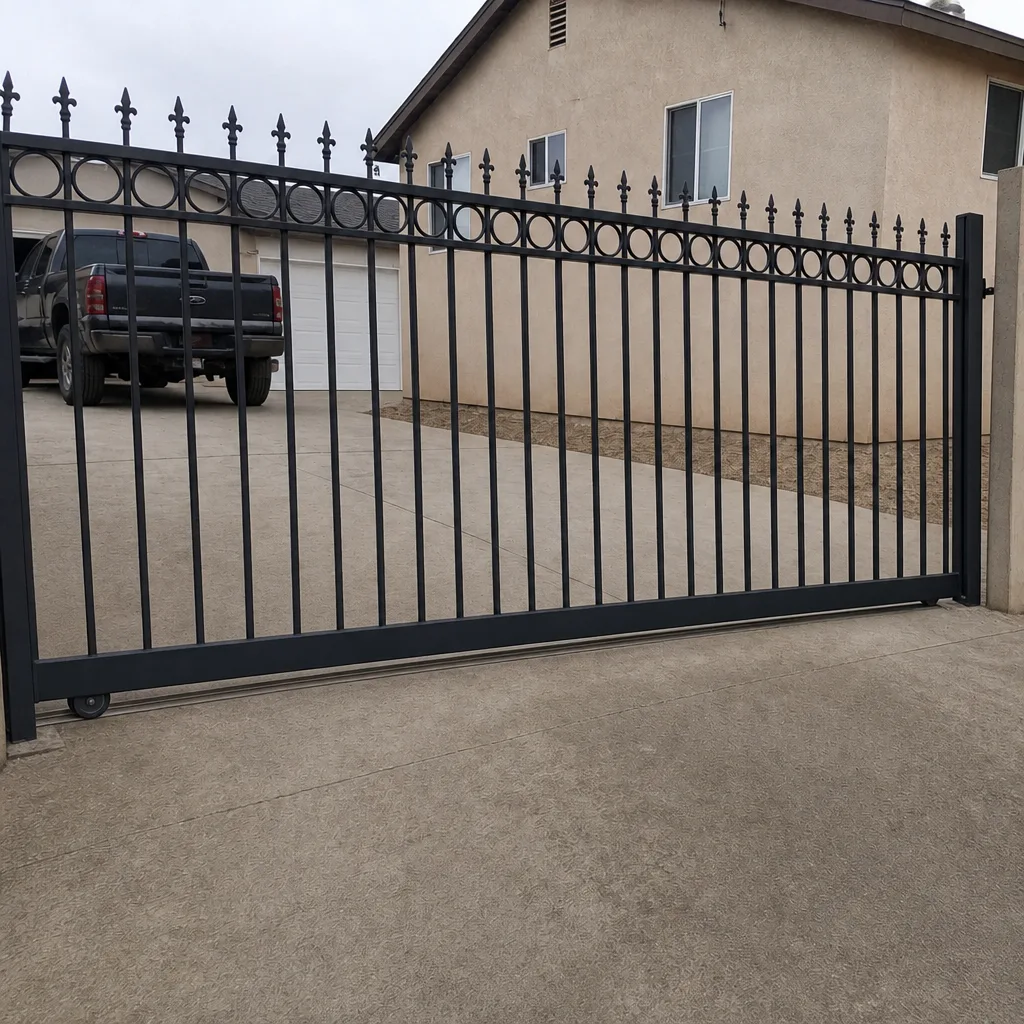
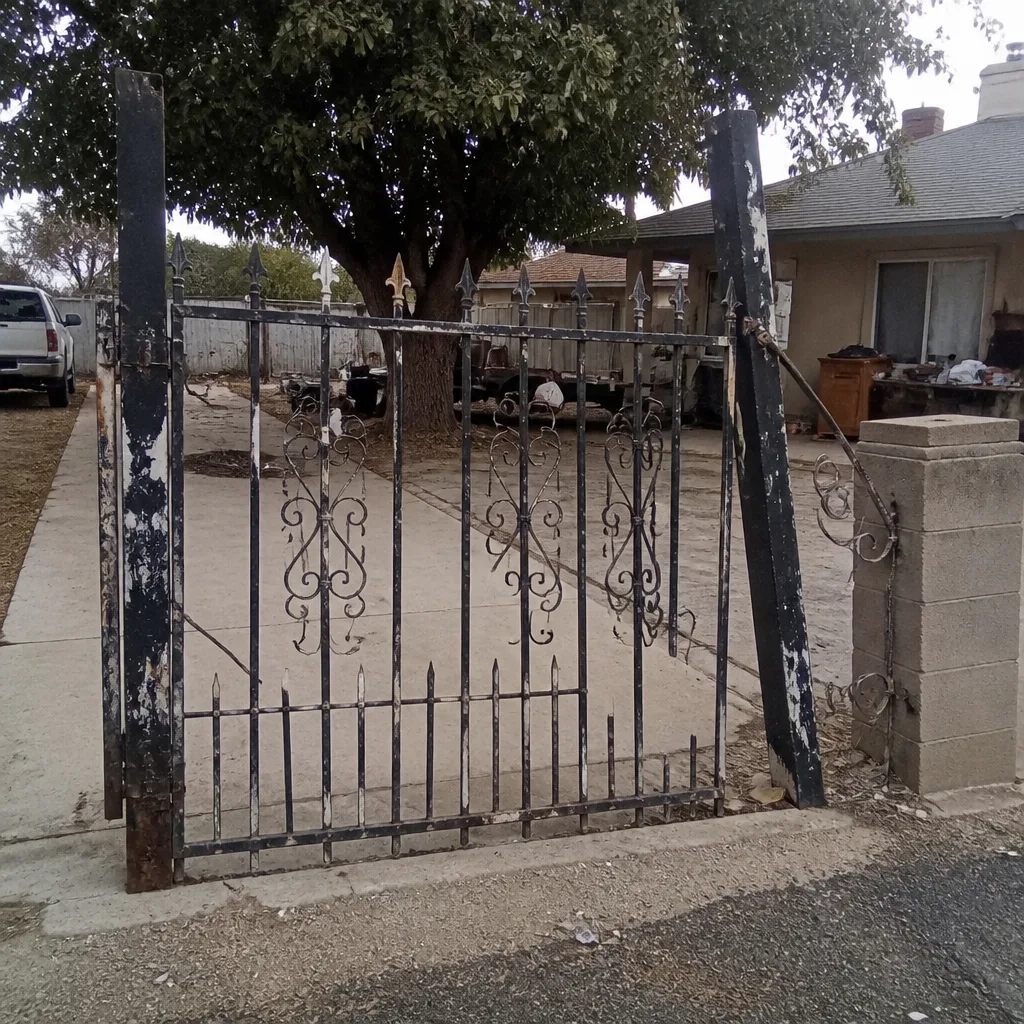
See the difference
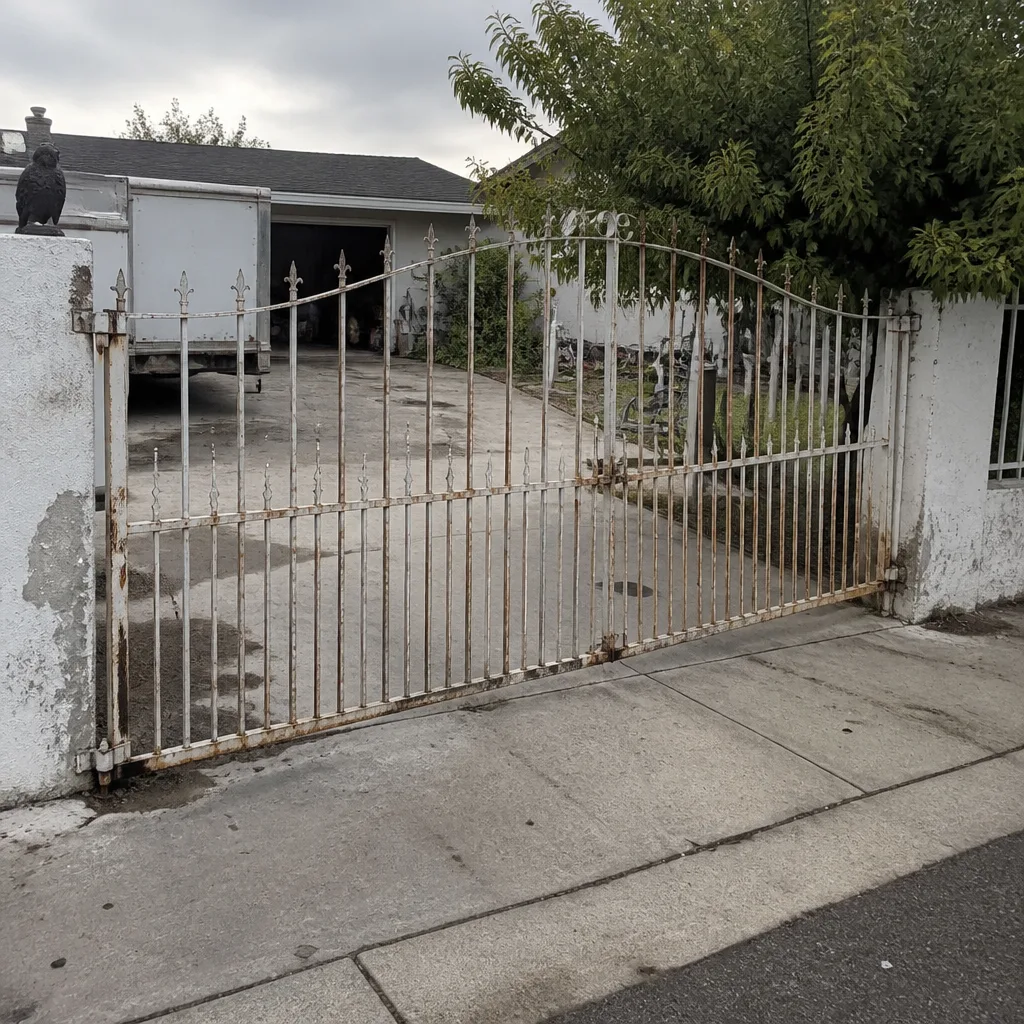 Before
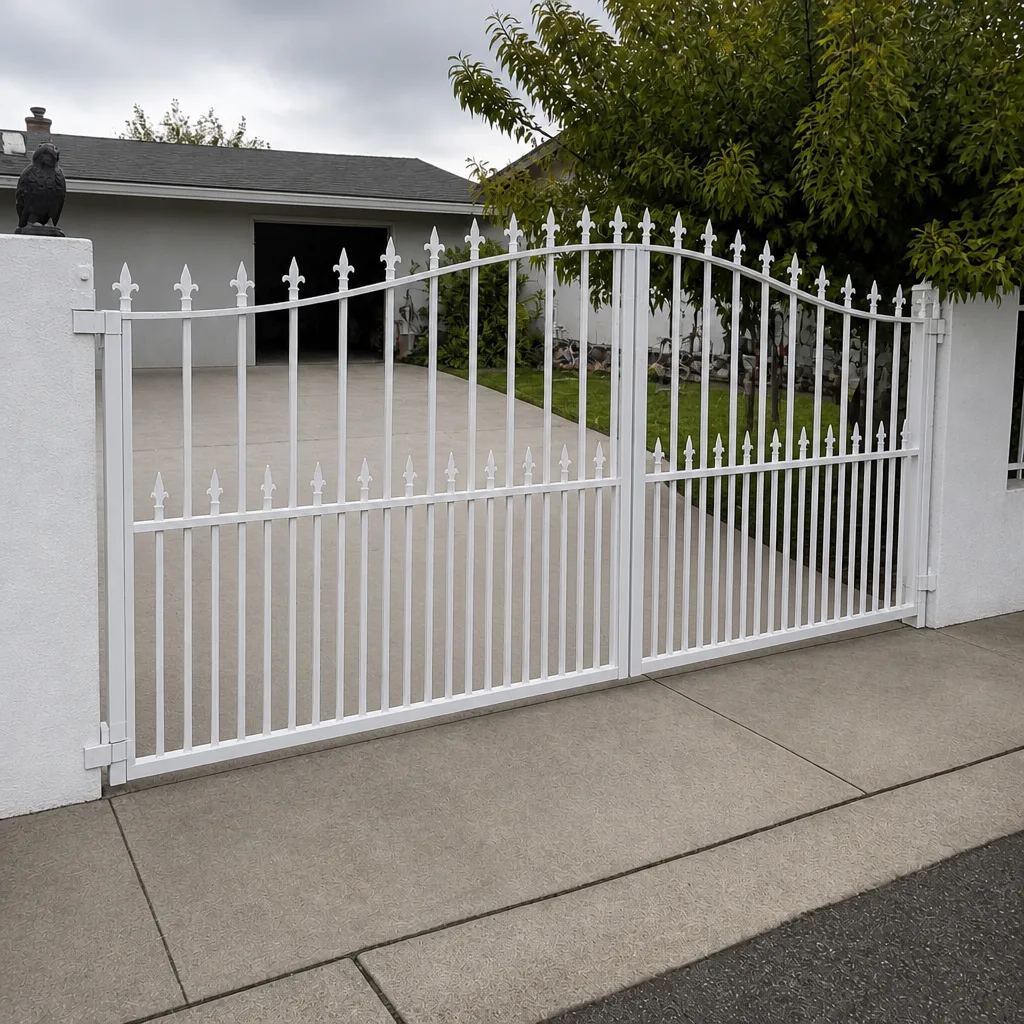 After
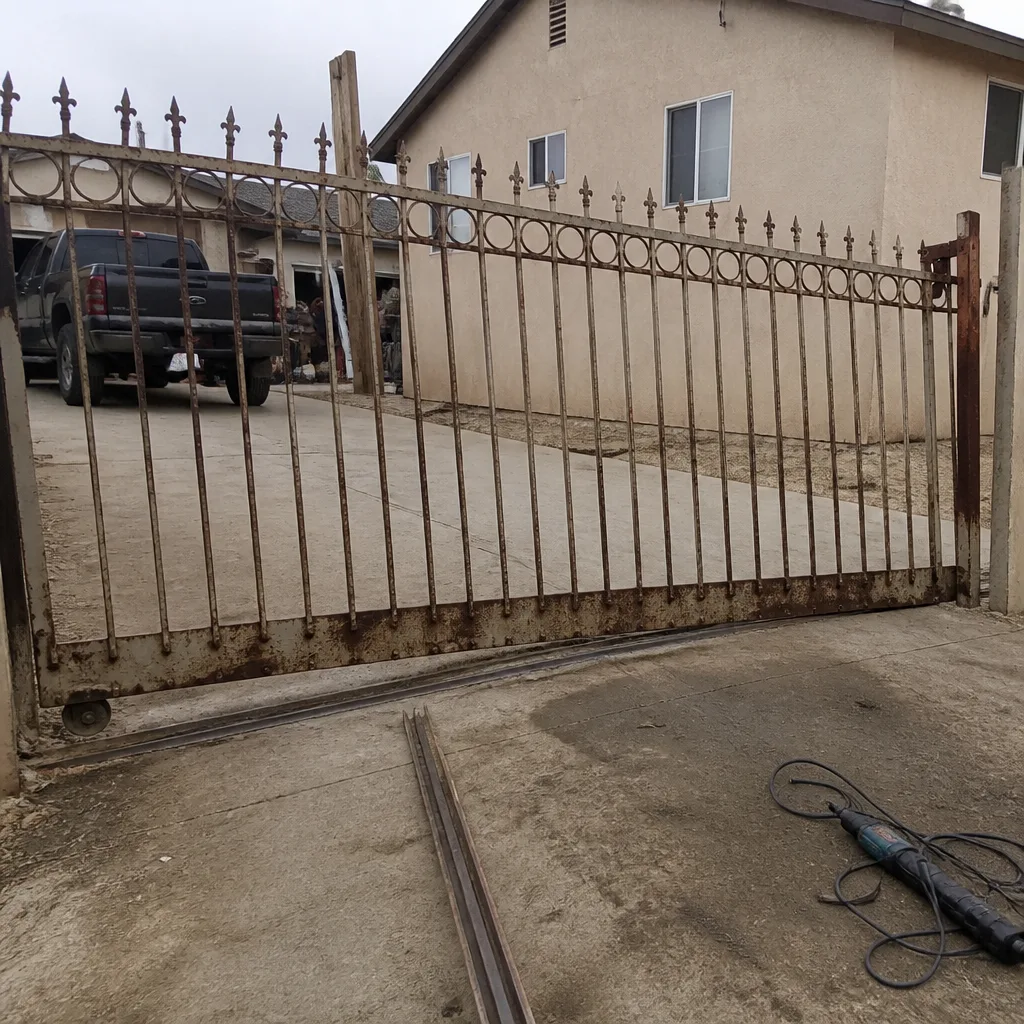 Before
 After
 Before
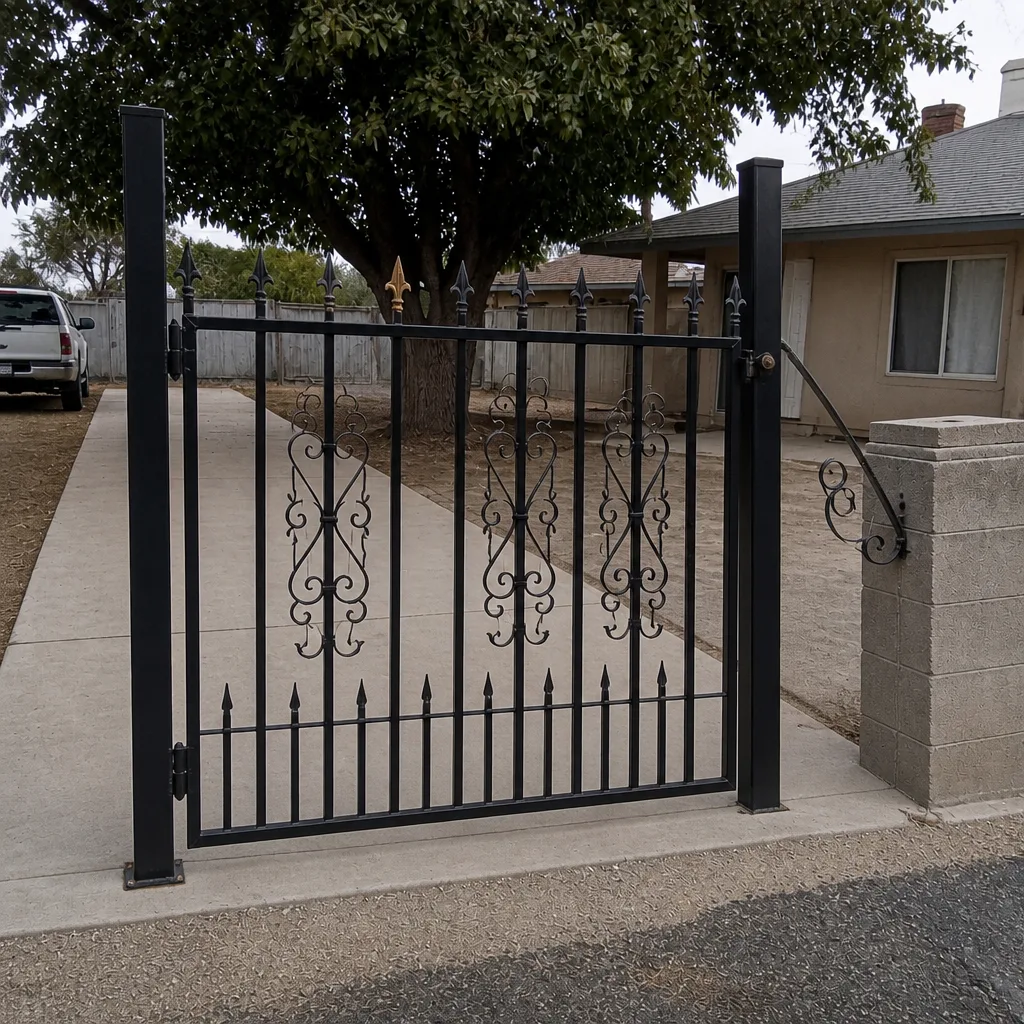 After
When to Call a Professional
Some maintenance tasks are safely doable for a homeowner: cleaning photo-eye lenses, clearing debris from a track, testing the battery backup, and checking for visible rust. But certain situations call for a technician with gate-specific experience. If your gate is making grinding or binding noises that didn’t resolve after cleaning and lubrication, the carrier assembly or motor bearings may be failing. If the control board shows visible damage like swollen capacitors or burn marks, continued operation risks a complete failure. If the gate struggles against the operator or stalls mid-cycle, the motor is working under abnormal stress. And if you find cracks in welds, pitting rust on structural members, or a post that’s beginning to lean, that’s a structural safety issue, not a maintenance item. Any work involving wiring, control boards, or high-tension mechanisms should be left to a trained professional; the risk of injury from a gate that moves unexpectedly or a panel that comes loose is real. Gate Repair Moreno Valley offers free estimates in Moreno Valley. Call (844) 614-1023. We answer 24/7. Fast dispatch from 7am to 7pm, Sunday through Friday.
Frequently Asked Questions
Lubricate your gate’s moving parts every 60 to 90 days from June through September, and every 4 to 6 months during the rest of the year. The summer schedule is tighter because heat thins out lubricants and dust from the dry climate mixes with the lubricant to form a grinding paste. For a free estimate on getting your gate caught up on maintenance, call (844) 614-1023.
Summer heat causes metal rails and chains to expand, which increases friction and makes the gate work harder. The same effect stresses the motor, and if the motor is already wearing out, the added load makes the decline obvious. Heat also reduces battery backup efficiency, so a gate that runs fine on AC power may be sluggish on battery during the hottest months.
After a Santa Ana wind event, check your gate’s weld points, hinge hardware, and operator mounting brackets for stress cracks or loosened bolts. The horizontal force from those winds pushes the gate in ways it wasn’t designed for, and the shock transfers into the structure. Also verify that the safety edges still reverse the gate properly, since wind-driven debris can damage the sensing strip.
No. WD-40 and other penetrating oils work as cleaners and moisture displacers, but they are not lubricants. They strip away the protective film that a proper lubricant leaves behind. Silicone spray and white lithium grease are the right choices for most gate applications, applied sparingly. Using the wrong product can damage rubber seals and plastic bushings over time.
Unplug the operator from AC power and run a full open-close cycle on battery only. A healthy battery runs the gate at normal speed. If the gate moves slowly, struggles, or doesn’t complete the cycle, the battery is near the end of its life. In Moreno Valley’s heat, batteries typically need replacement every 2 to 3 years, which is earlier than coastal climates.
Monthly cleaning and visual inspections are homeowner tasks. Lubrication is manageable if you know the right products and points for your gate type. But electrical system testing, control board inspection, weld evaluation, and any repair involving wiring or moving mechanisms should involve a professional. The safety risk from an unexpected gate movement or a structural failure is significant. Call (844) 614-1023 for a free estimate on professional maintenance and inspection. We answer 24/7. Fast dispatch from 7am to 7pm, Sunday through Friday.
The Bottom Line
Moreno Valley gates fail in patterns that follow the weather: heat stress in summer, wind damage in fall, and dust accumulation all year. A maintenance checklist built around those patterns works better than a generic national list. Lubricate the right points on your specific gate type with the right products. Test batteries more often in summer. Check sensors and safety features monthly. Inspect welds and hinges after wind events. Keep a simple written log. And when a problem goes beyond what you’re comfortable handling, call a gate specialist who works on your brand. Gate Repair Moreno Valley has served this city since 2015 with a single focus: gates. From repair to installation, we handle the full lifecycle. For expert help with your gate in Moreno Valley, reach us at (844) 614-1023. We answer 24/7. Fast dispatch from 7am to 7pm, Sunday through Friday.
Written by the team at Gate Repair Moreno Valley, serving Moreno Valley since 2015.