
Last updated November 4, 2026
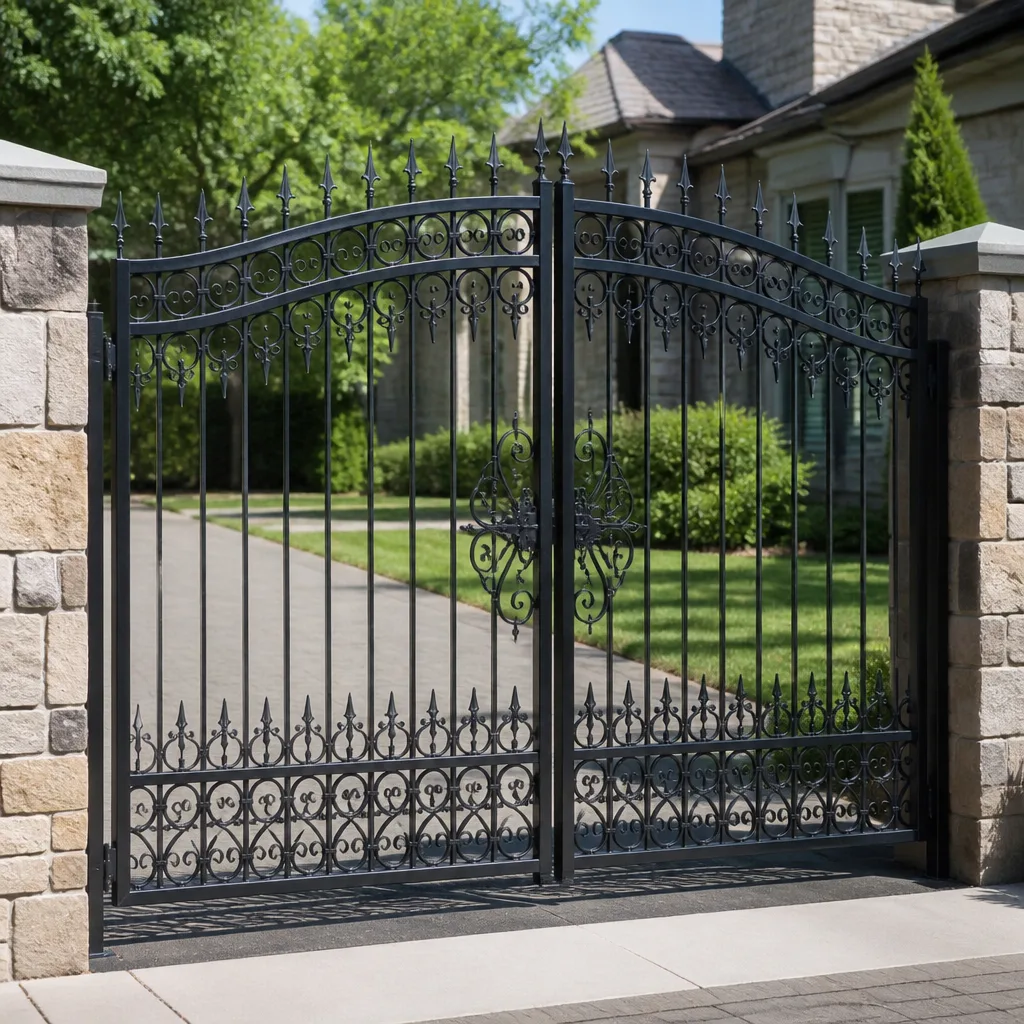 Wrought iron
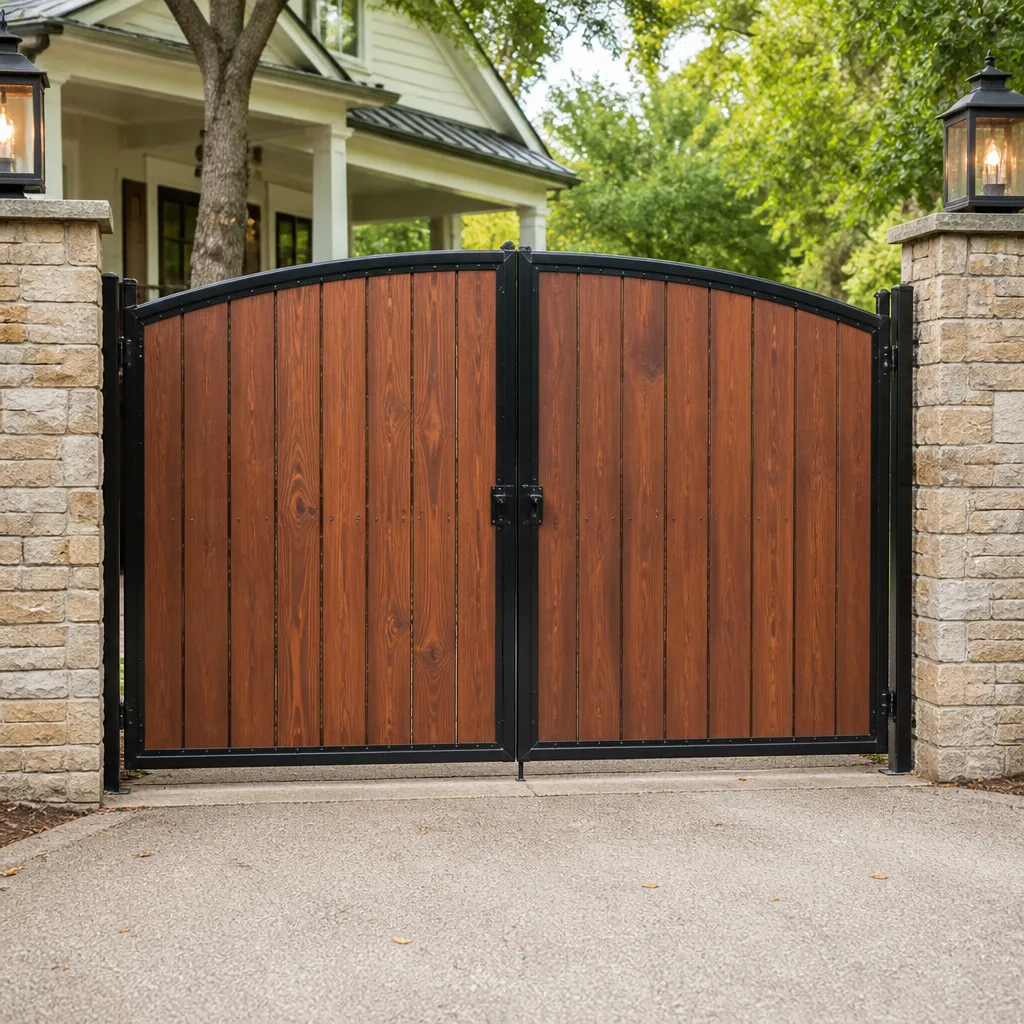 Wood & steel frame
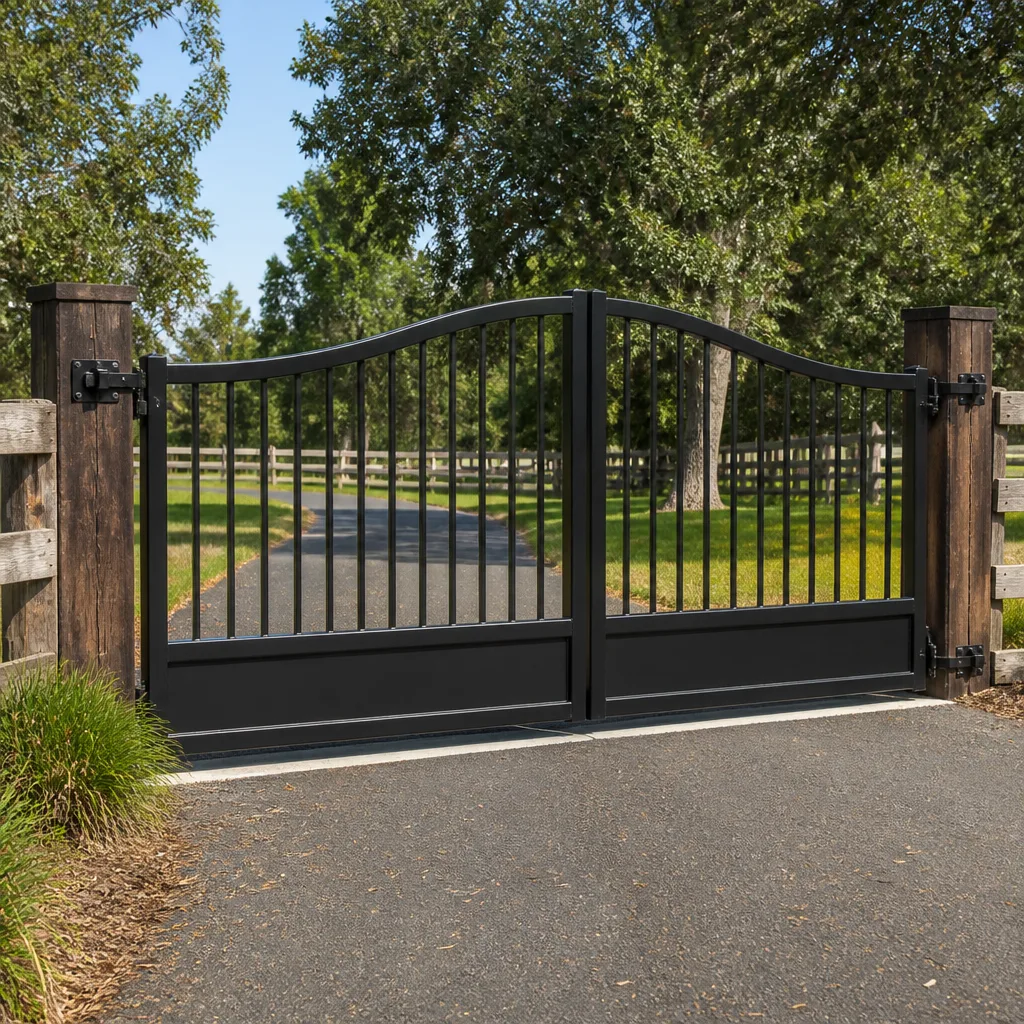 Farm & ranch
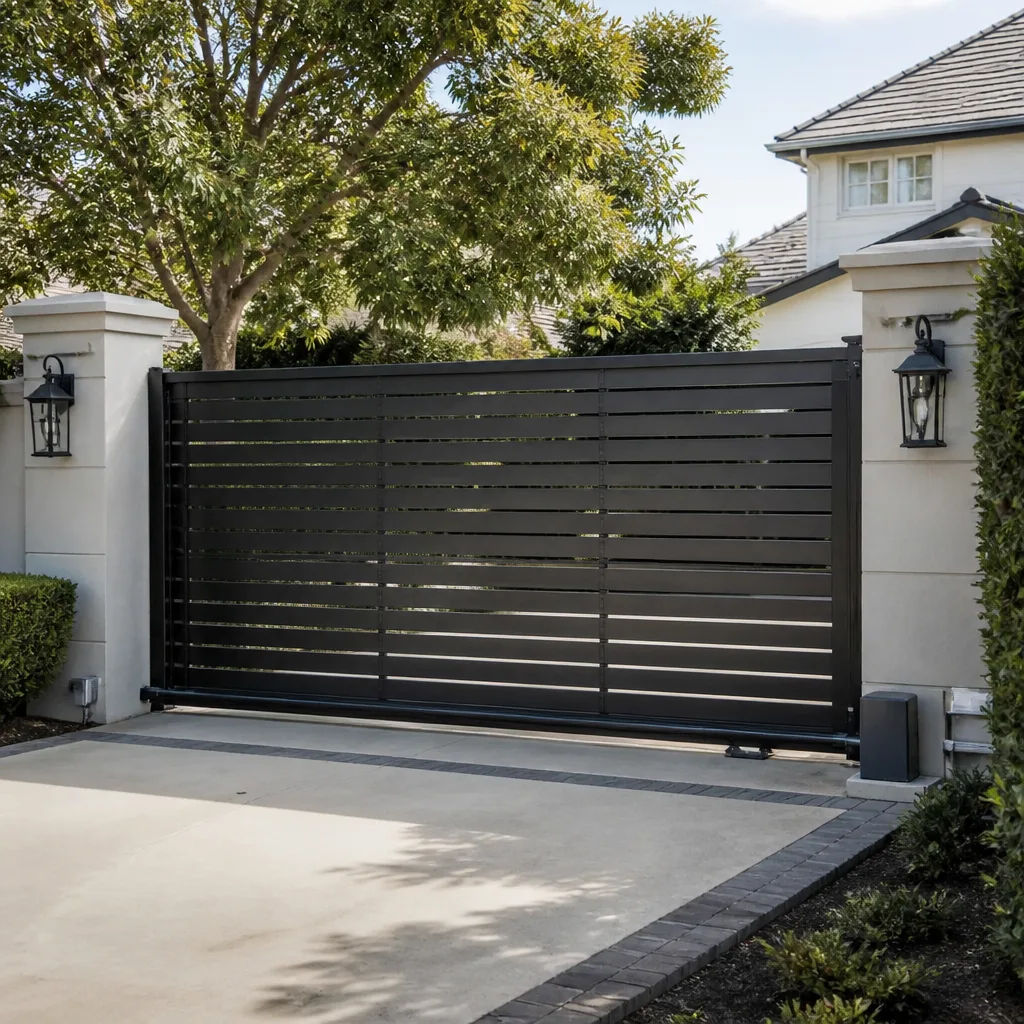 Sliding driveway gates
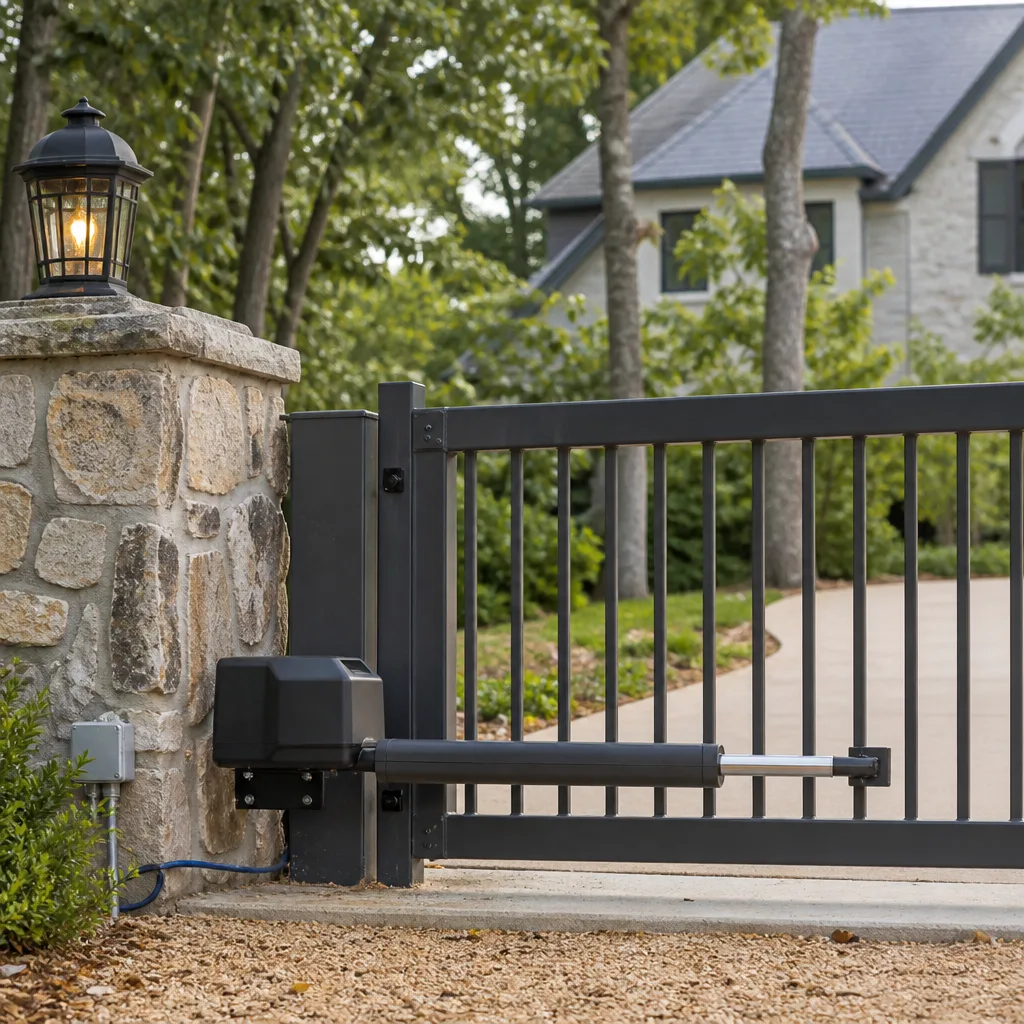 LiftMaster operators
Free on-site gate assessment - hinges, posts, and your LiftMaster or Nice gate operator checked before anything is quoted
The assessment is free and the quote is the invoice.
Get your free estimateSeasonal Gate Repair Care for Moreno Valley: Year-Round Homeowner’s Guide
Most seasonal maintenance guides assume your gate lives through four predictable seasons. Moreno Valley doesn’t work that way. The real maintenance calendar here is shaped by three stress events: pre-summer heat prep, Santa Ana wind season, and the brief winter wet period. October is the month that breaks the most gates in Moreno Valley, not because of cold, but because Santa Ana wind events put lateral stress on swing gate hinges that were already weakened by a summer of thermal expansion cycles. By November, the damage is done and the repair bills start. This guide walks you through what to check, when to check it, and which tasks actually matter for an automatic gate in this climate.
Quick Answer
Seasonal gate maintenance in Moreno Valley means preparing your gate for summer heat, Santa Ana wind events, and winter rain. The most important tasks are checking operator cooling and battery capacity before summer, inspecting hinge torque and gate stops before wind season, and applying rust inhibitor with proper drainage checks during the wet period. You can handle basic cleaning and lubrication yourself, but electrical components, hinge torque, and operator force limits should be checked by a gate specialist.
Styles & brands we work with
- Wrought iron
- Wood & steel frame
- Farm & ranch
- Sliding driveway gates
- LiftMaster operators
Table of Contents
- Why Moreno Valley Gates Fail on a Different Schedule
- Pre-Summer Heat Prep: The April-May Checklist
- Santa Ana Season Prep: September Through November
- Winter Wet Period Tasks: December Through February
- How Thermal Expansion Changes Your Gate’s Travel Limits
- Which Seasonal Tasks Affect Your Gate Warranty
- Common Mistakes to Avoid
- When to Call a Professional
Why Moreno Valley Gates Fail on a Different Schedule
Gate systems in Moreno Valley don’t wear out the way gates do in colder climates. There’s no freeze-thaw cycle to split metal, no ice dams to bend rails, no snow load to collapse panels. What we get instead is a relentless combination of dry heat and wind, punctuated by short periods of real rain. That combination produces specific failure patterns that repeat year after year.
Summer temperatures routinely push past 100 degrees in this part of the Inland Empire. That heat does two things to an automatic gate. First, it expands the metal. Aluminum and steel gates grow measurably longer in direct sun, and that growth changes how the gate sits in its track or on its hinges. Second, it strains the operator. The motor, control board, and battery all work harder when ambient temperatures climb. A battery that tests fine in March can fail in August because heat degrades its chemistry faster than the calendar suggests it should.
Then comes the wind. Santa Ana events in September, October, and November create sustained gusts that push against the entire face of a swing gate. That lateral force loads the hinges in a way normal operation never does. Hinges that were already working loose from thermal cycling start to sag. Gate stops get hammered. Operator force limits that were calibrated in calm spring weather suddenly let the gate push too hard trying to close against the wind, which burns out motors and strips gears.
The wet period is short here, but it matters. Rain in Moreno Valley tends to come in concentrated bursts. When water pools around post footings or runs down the face of a gate, it accelerates rust on steel components and corrosion on electrical connections that were already stressed by months of heat. The result is a maintenance calendar that doesn’t look like the standard four-season model. It looks like this guide.
We work on gates across the full gate repair spectrum, and the seasonal pattern we see is consistent: summer creates the underlying damage, Santa Ana season exposes it, and winter rain finishes off the components that were already marginal. Understanding that sequence is the first step to getting ahead of it.
Pre-Summer Heat Prep: The April-May Checklist
By late April, the mild part of the year is ending in Moreno Valley. This is the window to prepare your gate for the thermal stress of summer. Most of these checks take less than an hour, and several of them prevent failures that would otherwise strand your gate mid-cycle on a 105-degree afternoon.
Here’s the pre-summer checklist we recommend:
- Check operator cooling. Most residential gate operators rely on passive cooling through their housing. In Moreno Valley heat, that housing needs clear airflow. Remove any accumulated dust, leaves, or debris from the operator enclosure. Make sure the operator isn’t boxed in by plants or stored items that block air movement.
- Test battery capacity. Backup batteries exist so your gate still opens during a power outage. Heat accelerates battery degradation, and a battery that tests marginal in April will likely fail by August. If your operator has a battery, test it under load, not just with a voltmeter.
- Select the right lubricant. Heavy grease that works fine in moderate temperatures can stiffen or attract grit in high heat. Use a lubricant rated for high-temperature stability on hinge points and roller tracks. Wipe off old lubricant before applying new; layering different products creates a gummy residue that binds moving parts.
- Inspect hinge and roller wear. With the gate in the closed position, look at each hinge pin. Any visible sag or gap means the hinge is already wearing. In summer, that wear accelerates because thermal expansion changes how the gate’s weight sits on its hardware.
- Check all electrical connections. Heat loosens connections over time. Tighten terminal screws on the control board and at the operator. Look for discolored wire insulation, which signals a connection that’s overheating.
This is also the right time to review your gate’s automatic travel limits. If the gate struggles to fully close on hot afternoons, that’s a sign the operator needs a seasonal adjustment. More on that below.
If any of this feels outside your comfort zone, Gate Repair Moreno Valley handles pre-summer seasonal checks as a standalone service. You don’t need to be in the middle of a breakdown to have a specialist look at your gate.
Santa Ana Season Prep: September Through November
Santa Ana season is the most destructive period for gates in Moreno Valley. The wind events don’t just push on the gate leaf; they create repeated, variable load cycles that fatigue metal and loosen hardware. A gate that survived summer without issue can fail completely during one sustained wind event in October.
What to do before the winds arrive:
- Check hinge torque. Swing gate hinges have a specific torque specification, and seasonal wind loads are what expose loose ones. A hinge that’s slightly loose will allow the gate to shift under wind load, which then changes the gate’s alignment and forces the operator to work harder. Hinge bolts should be checked with a torque wrench, not just by hand.
- Adjust gate stops. Gate stops prevent the gate from traveling too far in either direction. When stops are misadjusted or worn, a wind gust can slam the gate past its intended stopping point, damaging the operator, the hinges, or the gate panel itself. Sliding gates have their own stop mechanisms at each end of the track.
- Recalibrate operator force limits. This is the task most homeowners skip, and it’s the one that matters most for wind season. The operator’s force limit determines how hard the motor pushes against resistance. Calibrated in calm conditions, it may be set too low to close the gate against Santa Ana winds, which causes nuisance reversals. Set too high, it can crush a person or pet. Wind season requires a recalibration that balances closing force with obstruction detection.
- Inspect track and roller alignment. Sliding gates are especially sensitive to wind-driven debris. Small rocks and branches get blown into tracks, where they cause rollers to bind and derail. Clean tracks thoroughly and check that rollers sit squarely on the rail.
- Tighten all panel fasteners. Wind vibrates everything. Bolts, screws, and brackets that were tight in summer shake loose after one or two Santa Ana events. Go over the gate panel, hinge brackets, and operator mounting hardware with a wrench.
Several of these tasks overlap with what we cover in electric gate repair work, because an operator that’s fighting wind loads is an operator that’s on its way to a failure. The control board, force calibration, and motor all get stressed when the mechanical side of the gate is out of adjustment.
Winter Wet Period Tasks: December Through February
The Moreno Valley wet period is brief compared to coastal California, but it arrives all at once. A few days of steady rain does more to a gate than six months of occasional drizzle. Water is the enemy of every gate component, and the goal of winter maintenance is to make sure water doesn’t pool, seep, or sit anywhere it shouldn’t.
Here’s what to handle during the wet months:
- Apply rust inhibitor. Steel gates and steel hardware rust in response to moisture. A quality rust inhibitor applied to hinge points, weld seams, and any exposed steel surface creates a barrier that lasts through the wet season. Reapply after each significant rain event if you notice water beading on bare metal.
- Inspect ground-level hardware. The bottom rail of a sliding gate, ground-track rollers, and gate stops all sit close to the ground where splashing water and pooled runoff accelerate corrosion. Check these components for rust formation and treat early. A small rust spot catches most homeowners off guard when it becomes a structural failure.
- Check drainage around post footings. Water that pools around gate post footings softens the soil, which allows posts to shift. In Moreno Valley’s compacted soils, a few inches of post movement changes the gate’s alignment enough to bind the operator. Walk the gate’s path after rain and look for standing water. If you find it, correct the grade or add drainage so water moves away from the footings.
- Test safety sensors. Wet conditions affect photo-eye sensors. A sensor lens covered in water droplets or mud from splash-back won’t see the beam consistently, causing the gate to reverse or refuse to close. Clean sensor lenses and check their alignment after rain.
- Inspect the operator’s weather sealing. Most operators are outdoor-rated, but seals age. A cracked gasket or missing cover screw lets moisture into the control board enclosure. That’s the start of corrosion on circuit board traces, which eventually causes intermittent operation.
Most residents know Moreno Valley as a dry place, and it is, for most of the year. But the wet period is real, and it’s when small neglected issues become structural problems. Ground-level hardware is the most common casualty we see after the first heavy rain.
How Thermal Expansion Changes Your Gate’s Travel Limits
This is the seasonal issue that causes the most confusing phone calls we receive. A homeowner tells us their gate was working fine all spring, and now in August it stops short of fully closing, or it hits the gate stop with a loud bang, or the operator reverses for no visible reason. The cause is usually thermal expansion, and the fix is a seasonal adjustment of the gate’s travel limits.
Here’s what’s happening. Aluminum expands about 13 millionths of its length per degree Fahrenheit. Steel is slightly less. That sounds small, but on a 20-foot gate, a 40-degree temperature swing changes the gate’s length by roughly three-quarters of an inch. Depending on the gate’s design, that expansion either extends the gate leaf toward the closed position or bows it slightly along its length.
Automatic operators use travel limits to know where the gate should stop. Those limits are typically set when the temperature is moderate. When summer heat expands the gate, the physical gate reaches the fully closed position before the operator thinks it should. The result is a gate that strains against its stops every cycle. In fall, as temperatures drop, the gate contracts and may not reach full closure at all, which leaves your property unsecured and triggers the operator’s obstruction detection.
The solution is straightforward: the travel limits need to be recalibrated seasonally. This is a simple adjustment on most systems, but it requires understanding how the specific operator reads position. Some use limit switches at the physical gate stops. Others use magnetic or electronic limits. Getting it wrong means either the gate over-travels, which damages hardware, or under-travels, which leaves an opening.
We see this most often on systems from LiftMaster, FAAC, and BFT, but every automatic operator brand has the same physics problem to deal with. The best practice is to check travel limits at the start of summer and again at the start of winter. It’s one of the maintenance tasks that genuinely pays for itself in avoided repair calls.
Which Seasonal Tasks Affect Your Gate Warranty
Gate warranties are written with specific maintenance expectations, and the tasks that preserve your warranty aren’t always the ones that seem most obvious. Some manufacturers require documented seasonal maintenance. Others void coverage if specific components are adjusted by anyone other than a qualified technician.
Here’s how it generally breaks down:
- Tasks that support a warranty claim: Lubricating hinges and rollers, cleaning tracks and sensors, applying rust inhibitor, checking battery voltage, and documenting these activities with dates. If you keep a simple log, you’re in a much stronger position if a component fails.
- Tasks that can void a warranty: Opening the operator housing and adjusting internal force settings, replacing control board components, recalibrating safety sensor alignment without proper equipment, or modifying the gate structure itself. Most manufacturers explicitly state that operator internals are serviceable only by qualified personnel.
- Gray areas: Travel limit adjustments sit in the middle. Some manufacturers are fine with owners adjusting limits. Others require a trained technician because incorrect limits can cause physical damage to the operator or the gate. Check your warranty document before touching limit settings yourself.
- Supporting documentation: If a component fails and you claim warranty coverage, the manufacturer will likely ask for maintenance records. A gate that shows no evidence of seasonal care is often denied on the basis of improper maintenance, regardless of whether neglect actually caused the failure.
If in doubt, have a specialist handle anything that involves the operator internals, force adjustments, or electrical connections. The cost of a seasonal service visit is almost always less than the cost of a denied warranty claim on a failed motor or control board.
Common Mistakes to Avoid
- Skipping the September force-limit recalibration. Most homeowners check their gate in spring and forget about it until spring returns. In Moreno Valley, the September recalibration is the one that prevents Santa Ana season damage. Skipping it is the single most common cause of October gate failures we encounter.
- Using any lubricant you find in the garage. WD-40 is a solvent, not a long-term lubricant, and heavy axle grease turns into a gummy mess at 105 degrees. Use a lubricant specified for gate hardware that maintains stability at high temperatures.
- Ignoring a gate that still opens. A gate that works despite a persistent clicking, grinding, or hesitation is a gate that’s telling you something. Those are the exact symptoms that precede a full failure during a wind event, when the gate is under maximum stress. Intermittent operation is a warning, not a quirk.
- Tightening hinges by feel. Hinge torque needs a torque wrench and the manufacturer’s specification. Over-tightening binds the hinge and accelerates wear. Under-tightening lets the gate shift under wind load. Guessing is how you turn a minor adjustment into a hinge replacement.
- Forgetting the ground-level hardware in winter. Everyone checks the gate leaf and the operator. Almost no one checks the bottom track, ground rollers, and lower hinge points, which sit in the splash zone during rain. That’s where rust starts and spreads.
- Adjusting travel limits without understanding your operator. Limit settings differ between switch-based, magnetic, and electronic systems. An incorrect limit setting causes the gate to hammer its stops or leave a gap, and repeated hammering destroys the operator’s gear train.
- Waiting for a full failure to call for help. Seasonal maintenance is cheaper than emergency repair. A gate that’s binding, grinding, or hesitating is easier and less expensive to fix before the component fails entirely, not after.
When to Call a Professional
Some seasonal tasks are genuinely do-it-yourself. Cleaning tracks, lubricating hinges, and checking drainage are within reach for most homeowners. Other tasks are not, and the dividing line is where electrical safety, hinge torque, and force calibration are involved. A gate operator runs on line voltage. Its motor can hold stored energy. Its force settings can cause serious injury if they’re wrong. We’re gate repair specialists, and we’d rather you call us before a problem becomes a failure than after.
If your gate is grinding, binding, reversing unexpectedly, or not fully closing, call a specialist. Gate Repair Moreno Valley offers free estimates in Moreno Valley. Call (844) 614-1023. We answer 24/7. Fast dispatch from 7am to 7pm, Sunday through Friday.
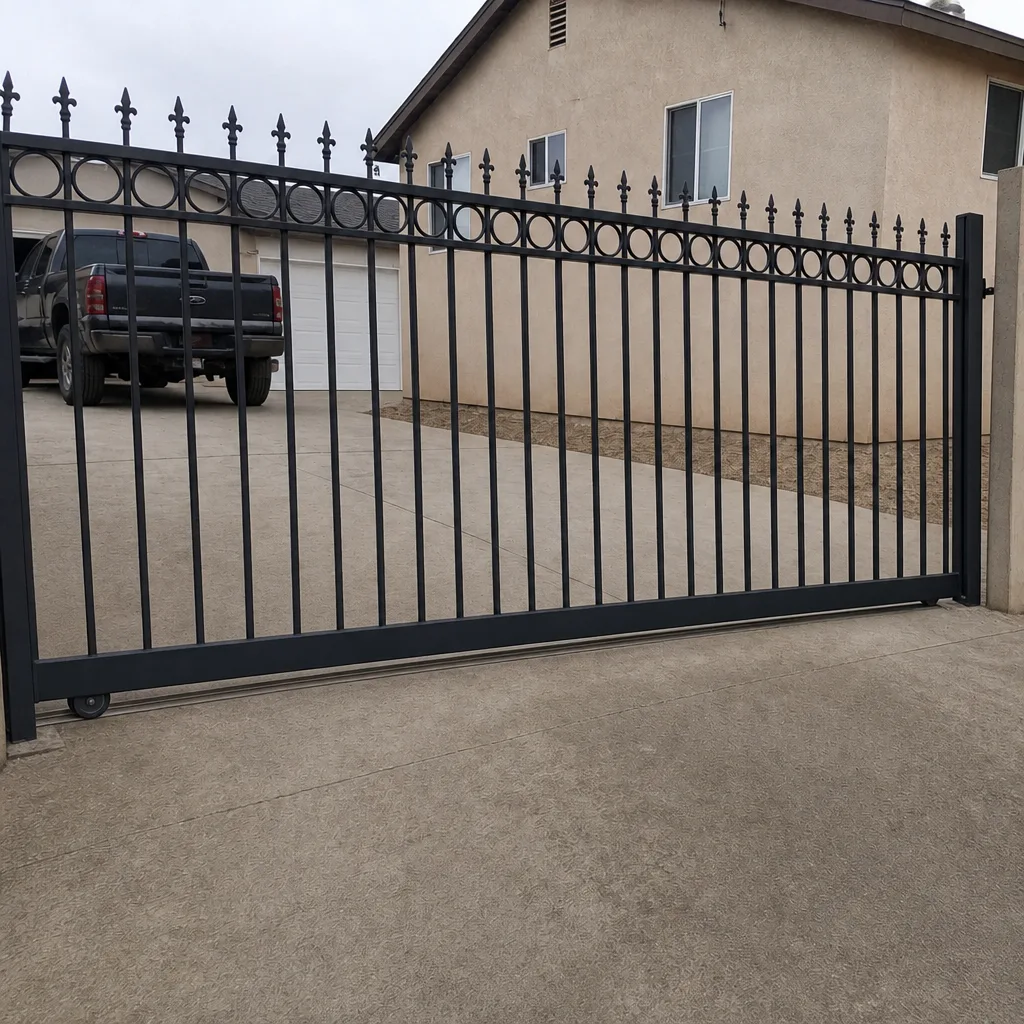
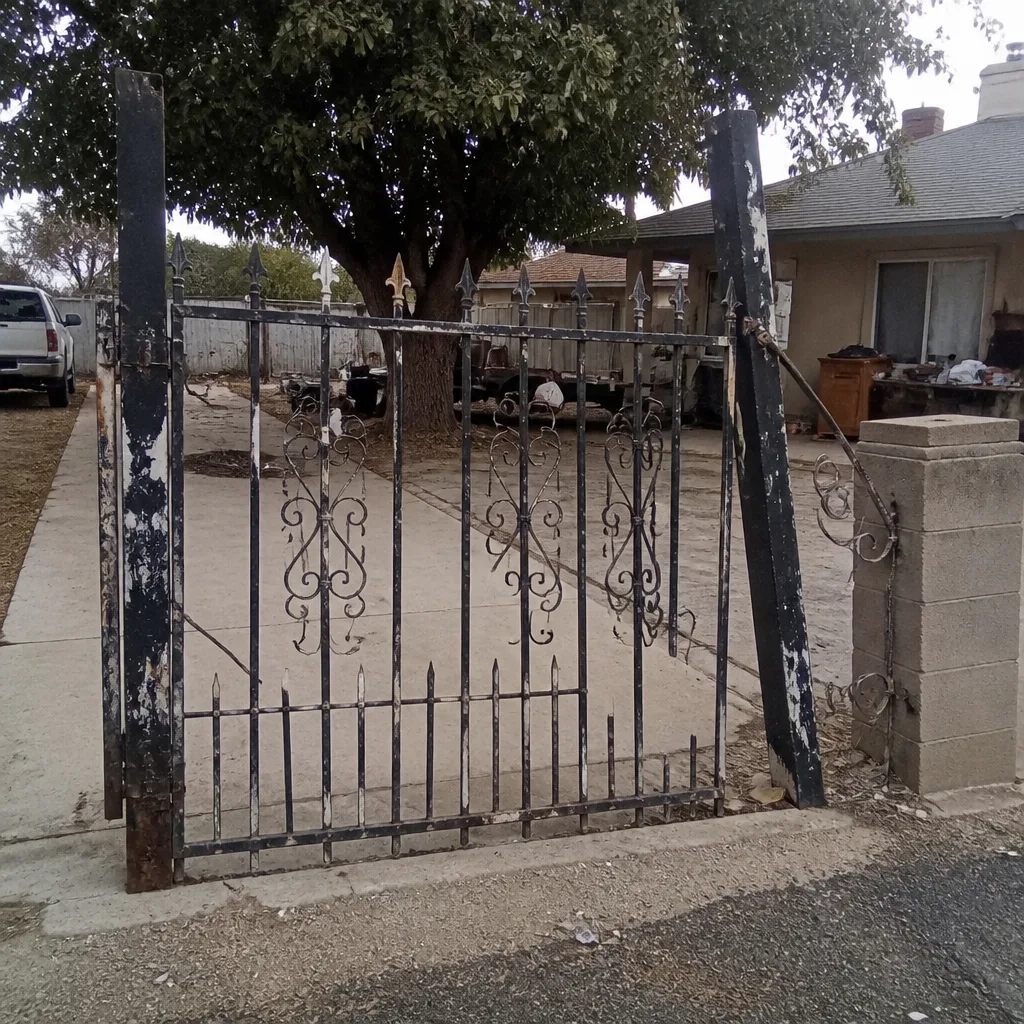
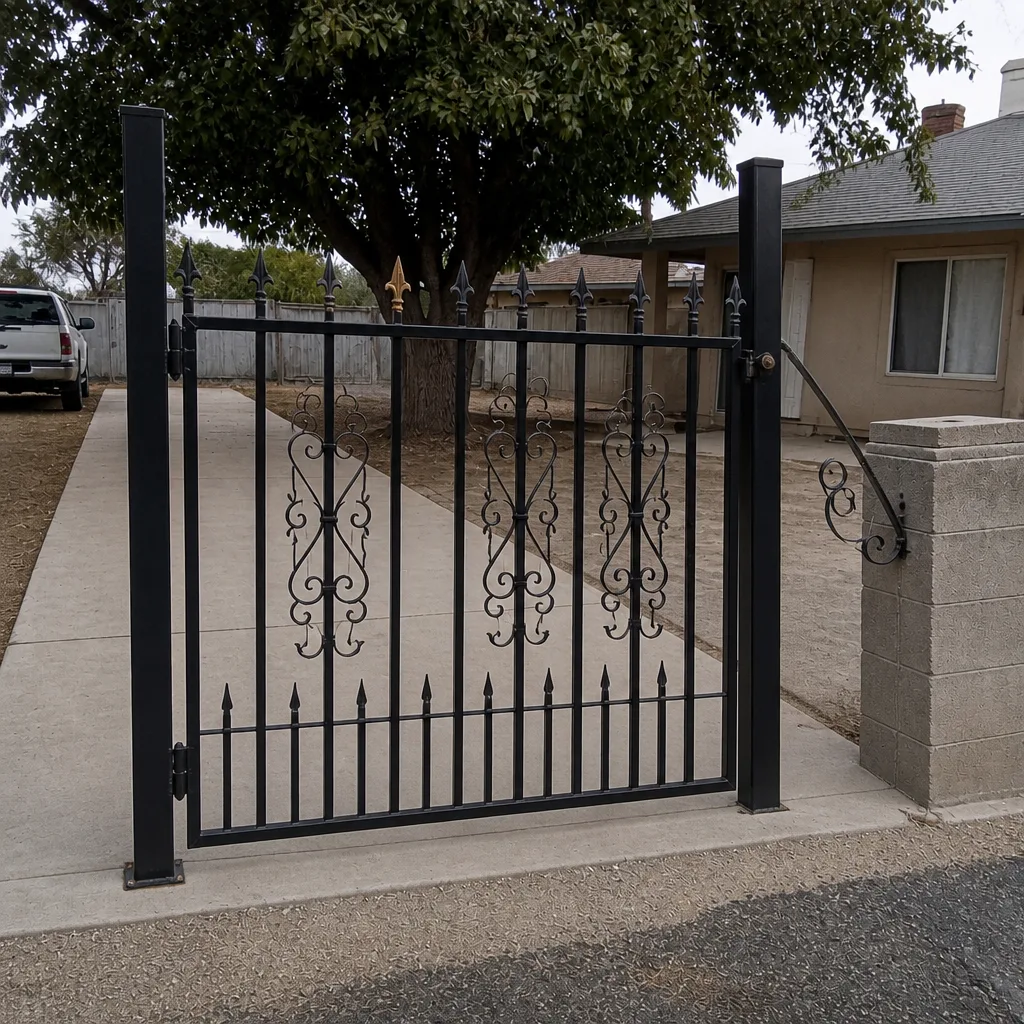
See the difference
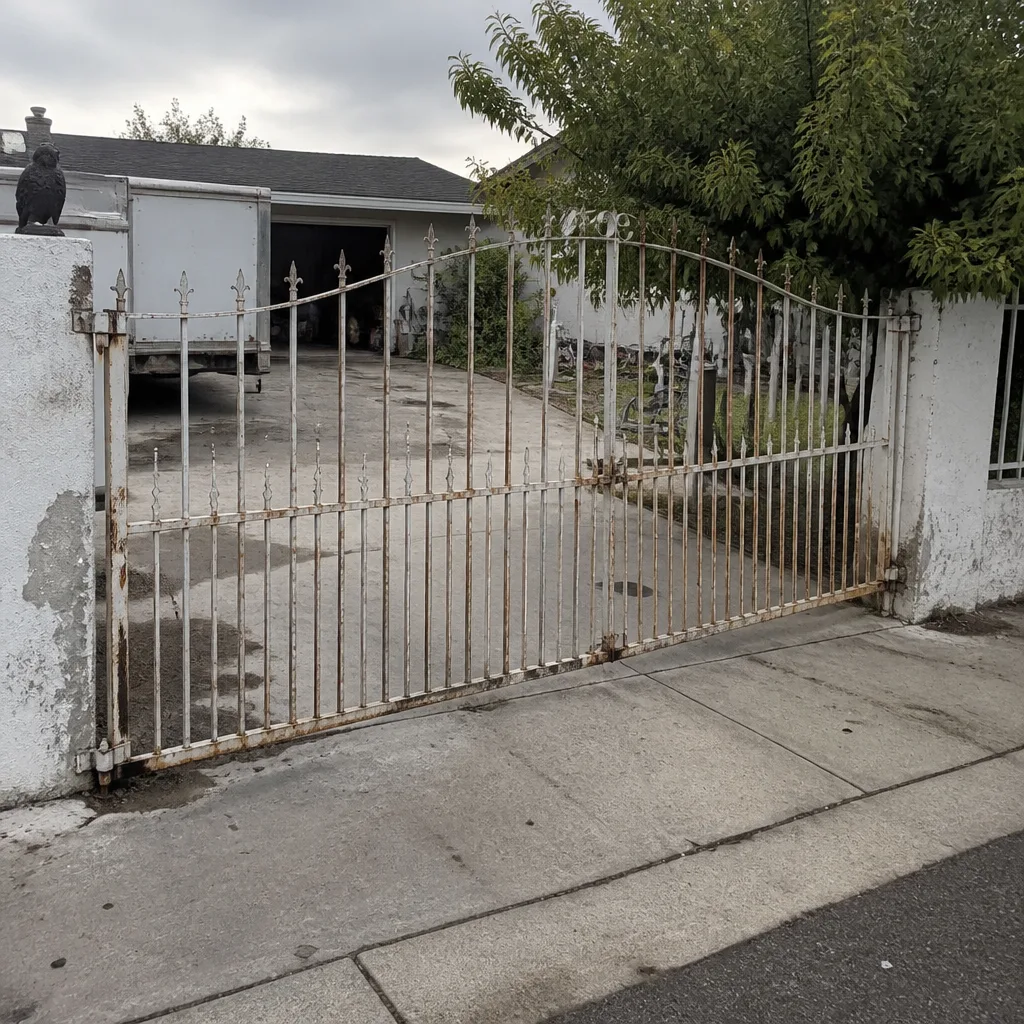 Before
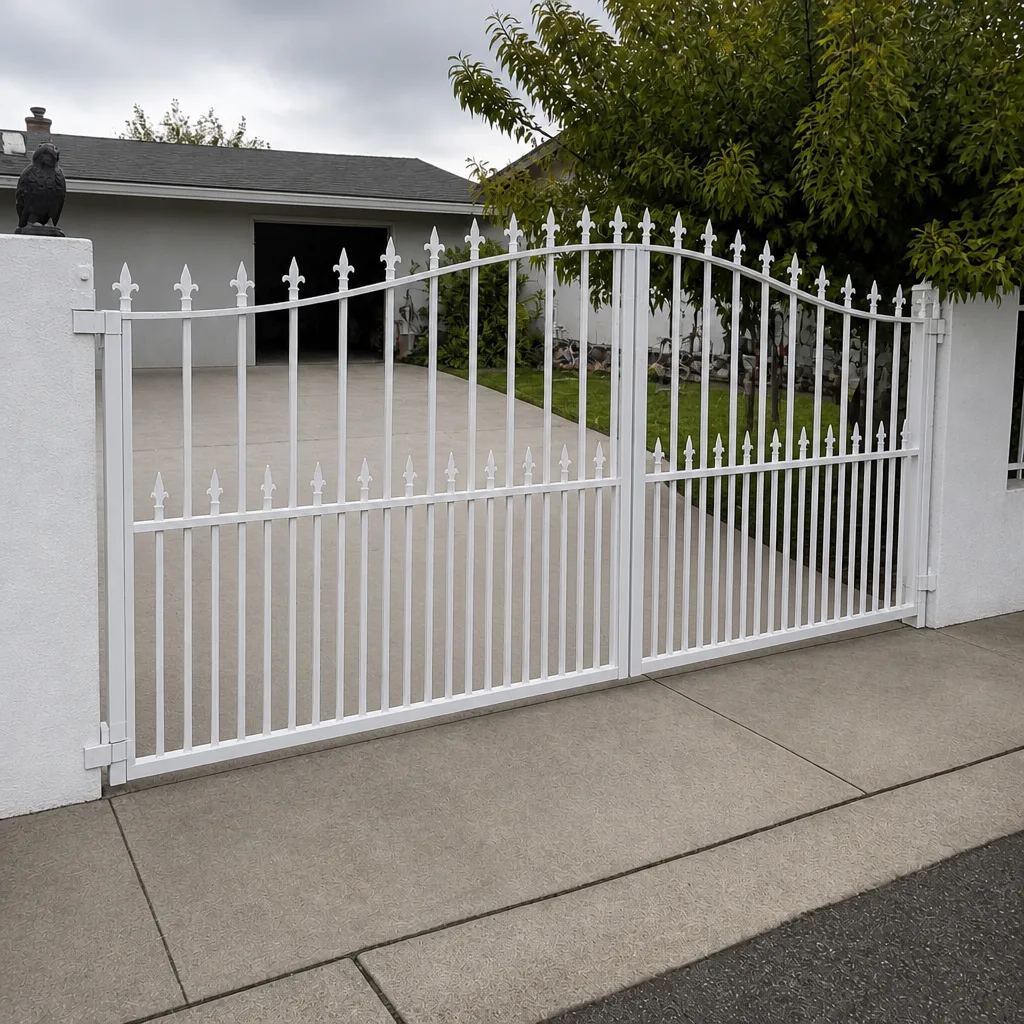 After
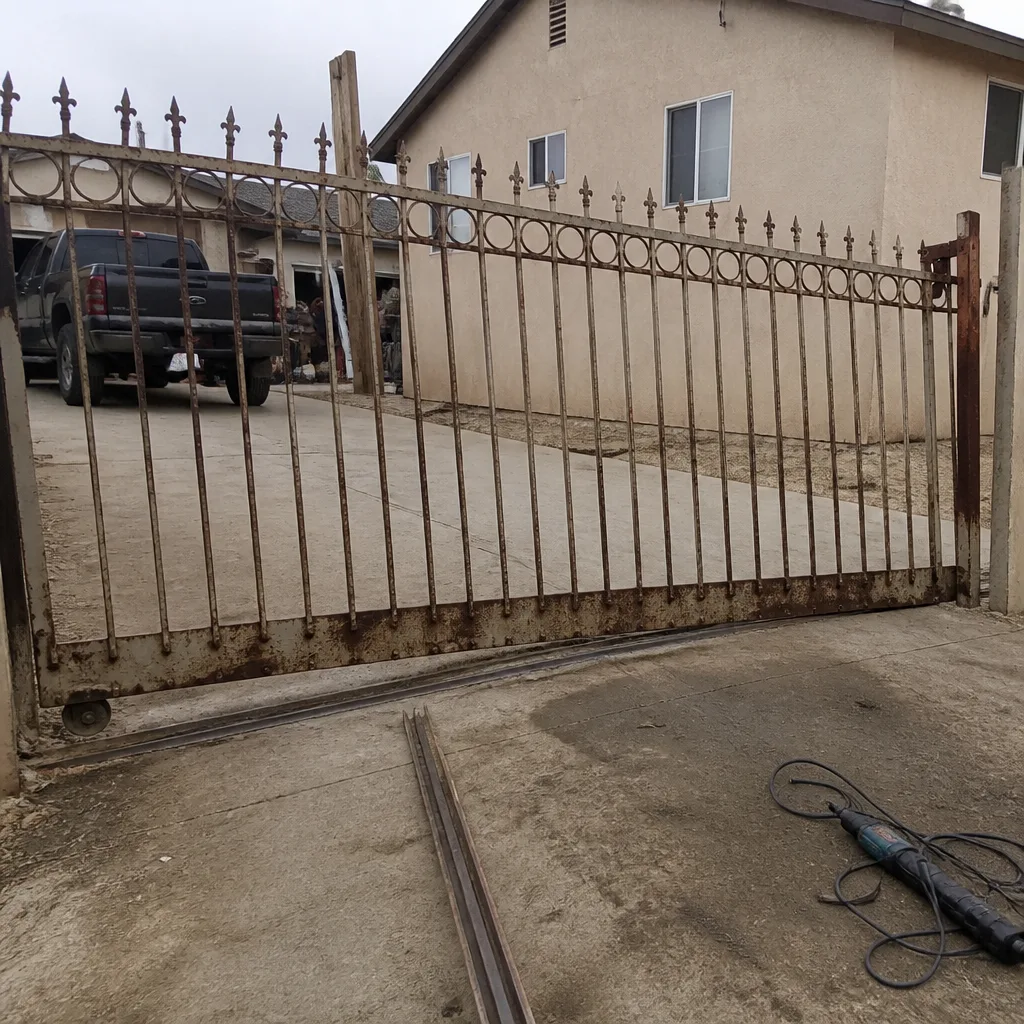 Before
 After
 Before
 After
Frequently Asked Questions
Twice a year, once in April or May before summer heat and once in September before Santa Ana season. If your gate sits in direct sun all day, consider a third check in December for drainage and rust during the wet period. Most homeowner-level tasks take under an hour each time, and a professional seasonal check catches the issues that shorten the life of the operator.
A seasonal visit covers hinge torque inspection, gate stop adjustment, operator force limit recalibration, travel limit checks, battery testing, lubrication, sensor alignment, and a visual inspection of all electrical connections and ground-level hardware. The final price is set per job by the written estimate, and you’ll know the cost before any work starts. Call (844) 614-1023 for a free estimate.
You can handle cleaning, lubrication, rust inhibitor application, and drainage checks yourself. What you should leave to a technician is anything involving electrical wiring, control board internals, hinge torque specifications, or operator force limits. Those tasks require equipment and training, and doing them wrong can cause injury or a damaged gate. If in doubt, have a specialist handle the electrical and calibration side.
Your operator’s force limit is probably set too low for wind conditions. When the wind pushes against the gate, the operator senses resistance and interprets it as an obstruction, so it reverses. The fix is recalibrating the force limit to balance closing pressure with safety. This is a task for a gate technician because force limits that are too high create a genuine safety hazard.
Most well-maintained operators last between 8 and 15 years in this climate. Heat shortens that lifespan primarily through battery degradation and motor strain. An operator that’s shaded, kept free of dust, and recalibrated seasonally will outlast one that’s ignored until it stops working. If your operator is older and starting to act up, a replacement may be more cost-effective than repeated repairs.
We work on gates from LiftMaster, FAAC, BFT, Linear, Viking, Ghost Controls, DoorKing, Elite, and Mighty Mule. We diagnose and repair whatever brand you already have, with no pressure to switch. Our team’s focus is entirely on gates, which means we see these systems daily and know their failure patterns without a lengthy diagnostic runaround.
The Bottom Line
Moreno Valley gates need a maintenance schedule built around heat, wind, and rain, not the four seasons you’d find in a general home-care guide. Pre-summer heat prep, Santa Ana season calibration, and winter drainage checks are the three anchors that keep an automatic gate running through the year. The tasks you can handle yourself are simple and worth doing. The tasks that involve electrical work, hinge torque, and force limits are worth paying a specialist to handle. A gate that’s maintained seasonally is far less likely to fail at the worst possible moment. Start with the current season, work through the relevant checklist, and if anything looks questionable, call for a free estimate before it becomes a repair call.
Written by the team at Gate Repair Moreno Valley, serving Moreno Valley since 2015.